Packaging and equipment protect the order between the pass and the customer. They must support food safety, prevent leaks and crushing, separate incompatible products, make the handover unambiguous and remain practical during a busy service. Branding matters, but it is not the first requirement.
Design packaging from the journey
| Risk | Packaging or equipment control |
|---|---|
| Leakage | Compatible lid, fill level, seal and upright bag position |
| Condensation | Ventilation appropriate to the product |
| Heat loss | Suitable container, insulated transport and realistic journey limit |
| Cold product warming | Separation from hot items |
| Crushing | Stacking rule, rigid container and bag capacity |
| Wrong handover | Clear order ID, bag count and destination label |
| Tampering concern | Appropriate seal without creating a false safety guarantee |
Separate the three decisions
- Food container: directly holds the item.
- Order packaging: groups and labels the customer order.
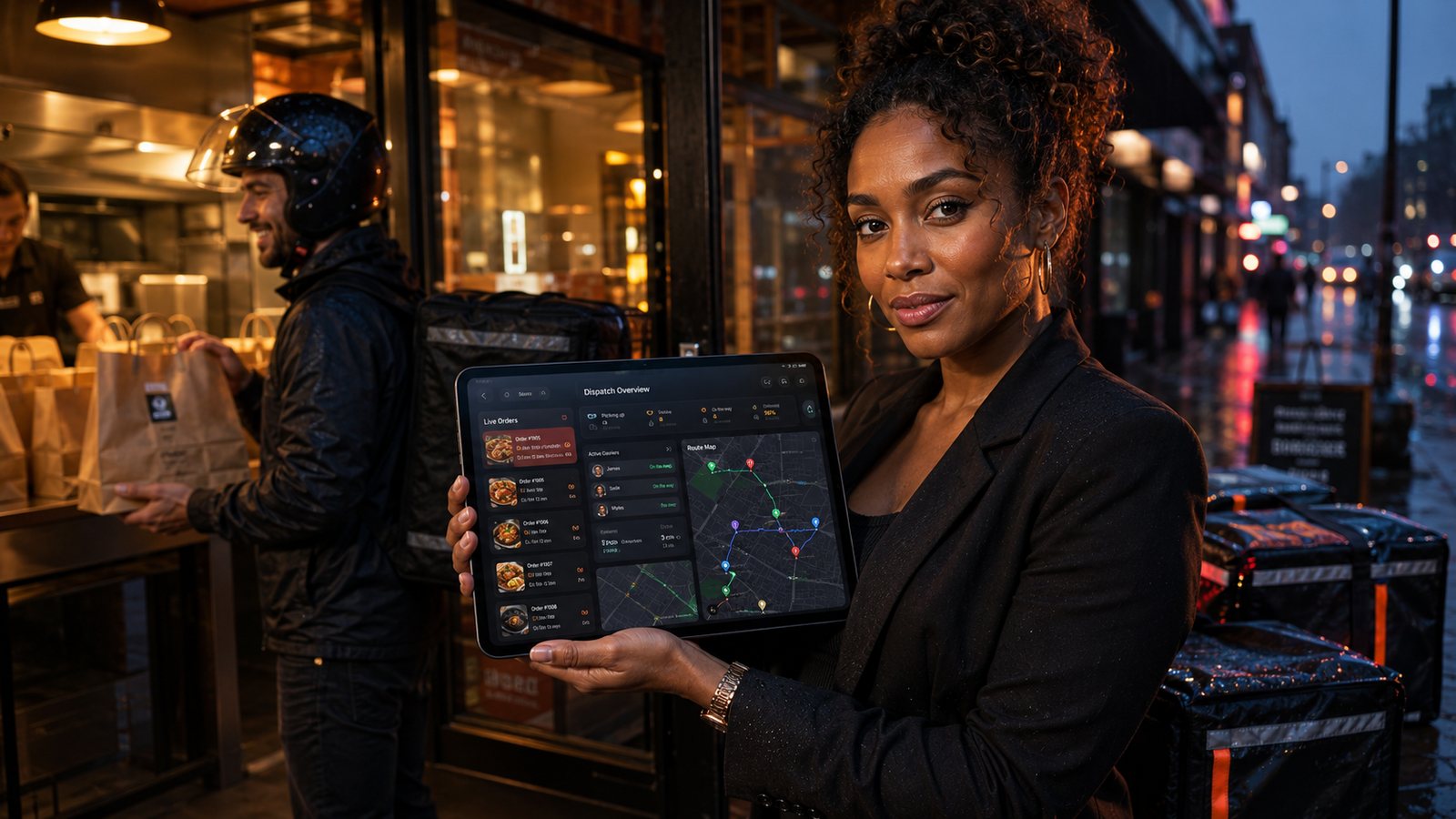
- Transport equipment: bag, rack, vehicle box or other equipment used for the journey.
Changing one layer may affect the others. A larger container may no longer fit safely in the delivery bag; a heavily sealed bag may worsen condensation.
Test with representative orders
- Pack ordinary, large and mixed hot/cold baskets.
- Use the actual bag and vehicle arrangement.
- Replicate the expected journey and handling.
- Inspect leakage, movement, temperature suitability and presentation.
- Check label readability and bag-count accuracy.
- Repeat in poor weather and peak batching conditions.
Maintain equipment
Create cleaning, inspection and replacement rules for insulated bags, racks, boxes, straps and labels. Remove equipment with damaged linings, broken zips, contamination or lost structure. Keep enough spare capacity for a failure during service.
Control food and customer information
Allergen information and food-safety controls belong to the business’s documented process, not to a generic “allergy safe” sticker. Use only the customer and order information needed for the handover, and avoid exposing phone numbers or full addresses on packaging after delivery.
Measure the full cost
Track containers, bags, seals, labels, consumables, cleaning, damaged stock and replacement equipment per order or service period. Compare savings with leakage, remakes, refunds and complaints. A cheaper container is not a saving if it increases failure.
Routes through this section
- Use Takeaway Packaging for Delivery for menu-specific container and presentation decisions.
- Use Delivery Bags and Equipment for transport equipment and maintenance.
- Use Packaging Costs and Margin Impact for cost control.
Control supplier and packaging changes
A container described as the same size may change lid fit, material, ventilation or stacking. Test substitutes before service and record approval. Update packing instructions when a menu item, portion, sauce or delivery zone changes. Do not allow a purchasing substitution to bypass food-safety and journey testing.
Design the packing station
Store packaging in the order of use, separate customer receipts from kitchen tickets, provide a clear completed-order area and keep labels accessible without blocking food handling. Measure packing time and mistakes during peaks; equipment that saves a few pence but slows every order can increase total cost.
Practical next step: run a journey test on five representative baskets and record every movement, leak, temperature concern, label issue and packing delay.
Official UK food-delivery guidance
Guidance checked: 24 July 2026. Delivery packaging, transport and handover should remain part of the business’s food-safety management system.
Related guides
- Delivery Management — the main guide for the wider topic.
- Delivery Bags and Equipment — a detailed next step for putting this guidance into practice.
- Packaging Costs and Margin Impact — a detailed next step for putting this guidance into practice.
- Delivery Operations Overview — a closely related operational control to review alongside this page.
- Delivery Zones and Minimums — a closely related operational control to review alongside this page.