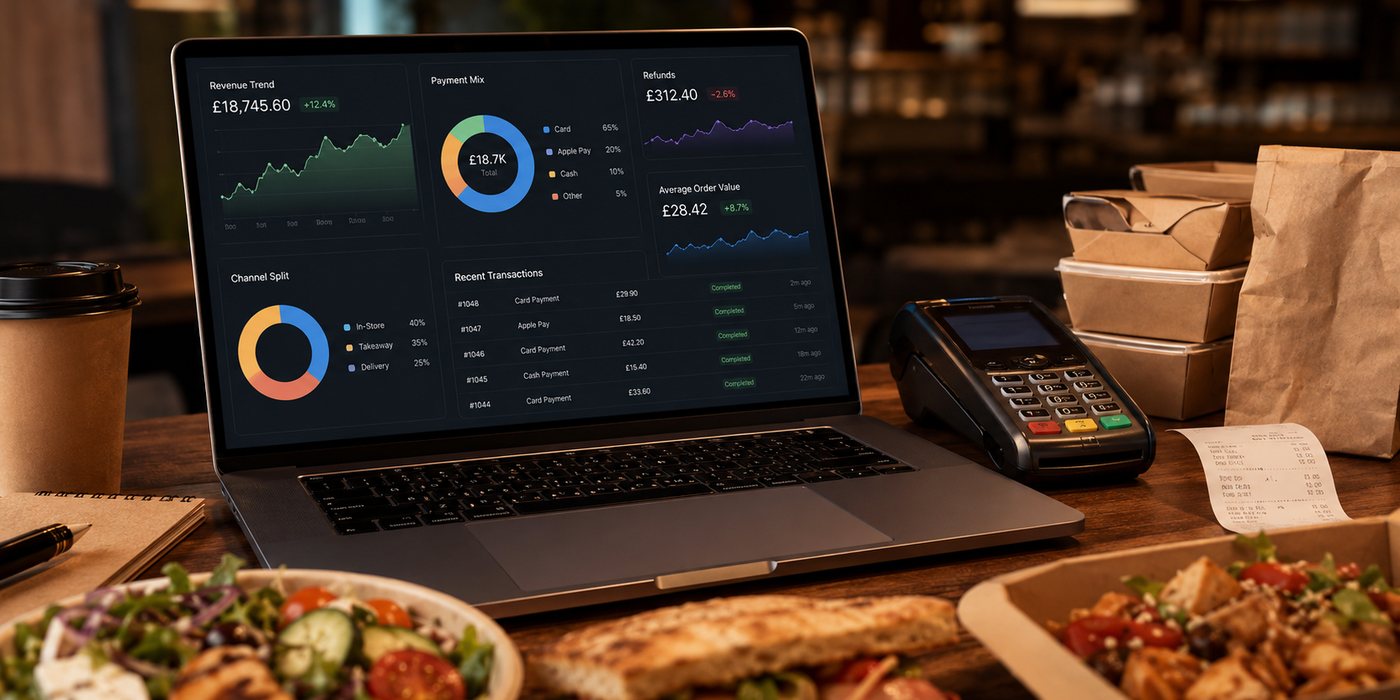
Digital ordering is a business operating model, not a single software expense. Plan it through full cost, contribution, cash flow, compliance, staged investment and evidence-based review.
Use one financial model across every channel
Website, app, marketplace, telephone and counter orders should be compared on the same basis. Start with completed net sales, then deduct the costs that genuinely vary with the order: ingredients, packaging, payment, marketplace charges, promotion funding, delivery, incremental labour and expected failures. Keep fixed and shared costs visible, but do not allocate them in a way that makes one channel look artificially profitable or unprofitable.
| Planning question | Primary guide |
|---|---|
| What does digital operation actually cost? | Cost Analysis for Digital Operations; Total Cost of Running Online Ordering |
| Does a channel create healthy contribution? | Channel Profitability; How to Calculate Contribution Margin by Ordering Channel |
| How should delivery and mandatory fees be designed? | Pricing Delivery to Cover True Costs; Service Charge Models |
| Can an app or system repay its lifecycle cost? | Break-Even Analysis for a Takeaway App; Measuring Return on Investment |
| Which investment should happen first? | Prioritising Investments by Impact; Budget Planning for Digital Investment |
| How should change be introduced? | Phased Rollout Strategies |
Build a full-cost ledger
- One-off setup, migration, hardware and training.
- Recurring licences, support and developer accounts.
- Payment and marketplace charges.
- Packaging and fulfilment cost.
- Internal administration, reconciliation and customer support.
- Promotions, loyalty liabilities and acquisition spend.
- Refunds, chargebacks, remakes and failed deliveries.
- Maintenance, upgrades, data export and supplier exit.
Record the source, period and confidence of every material input. Supplier quotations should be normalised to the same order volume, average basket, payment mix, delivery model and contract term. A low headline fee is not a comparable quotation when essential support, integration, refunds or exit are priced separately.
Plan contribution before growth
Gross sales can grow while cash and service quality deteriorate. Review contribution per completed order, contribution per scarce kitchen minute and contribution by fulfilment type. Keep raw counts alongside percentages. A high-margin percentage on a small or unusually easy cohort should not drive a network-wide decision.
Protect cash flow
Map when customers pay, when providers settle, when suppliers and staff are paid, and when refunds or chargebacks may reverse cash. Marketplace deductions and delayed settlements can create a gap between reported sales and money available. Maintain a reconciliation route from order to payment, provider statement, bank deposit and accounting entry. Budget contingency for implementation delays and a controlled period of parallel operation.
Separate mandatory, defensive and growth investment
| Category | Examples | Decision test |
|---|---|---|
| Mandatory | Legal, food-safety or payment requirements | What must be done and by when? |
| Defensive | Outage recovery, security, data export | What loss or interruption does it prevent? |
| Operational | Menu control, routing, reporting | Does it remove a demonstrated bottleneck? |
| Growth | App, loyalty, new acquisition channel | What incremental contribution is plausible? |
Use stage gates rather than one large commitment
Approve discovery, configuration, pilot and expansion separately. Each stage should have an owner, budget, evidence requirement and stop rule. Do not release the next payment merely because a date has arrived; release it when agreed acceptance tests pass. Preserve a rollback route and enough working capital to operate if the expected benefit is delayed.
Govern pricing transparently
Customers should understand the total compulsory price before committing. Distinguish delivery charges, small-order fees, business service charges and optional tips. Test refunds and promotions against the pricing model. Review whether channel differences reflect real cost and a clear commercial strategy rather than an accidental accumulation of provider settings.
Maintain a monthly decision pack
- Completed orders and net sales by channel.
- Contribution and failure cost.
- Settlement and cash exceptions.
- Supplier performance and unresolved defects.
- Budget used versus accepted deliverables.
- Customer and operational guardrails.
- Decisions, owner and review date.
Related guides
- Budget Planning for Digital Investment — a detailed next step for putting this guidance into practice.
- Cost Analysis for Digital Operations — a detailed next step for putting this guidance into practice.
- Restaurant Marketing and Customer Retention — a closely related operational control to review alongside this page.
- Cross-Channel Operations — a closely related operational control to review alongside this page.
- Payments — a connected decision that can change the recommended approach.
- Online Ordering — a connected decision that can change the recommended approach.
Sources and date checked
Guidance checked: 24 July 2026. Tax, pricing and employment requirements can change; recheck them before making a material decision.