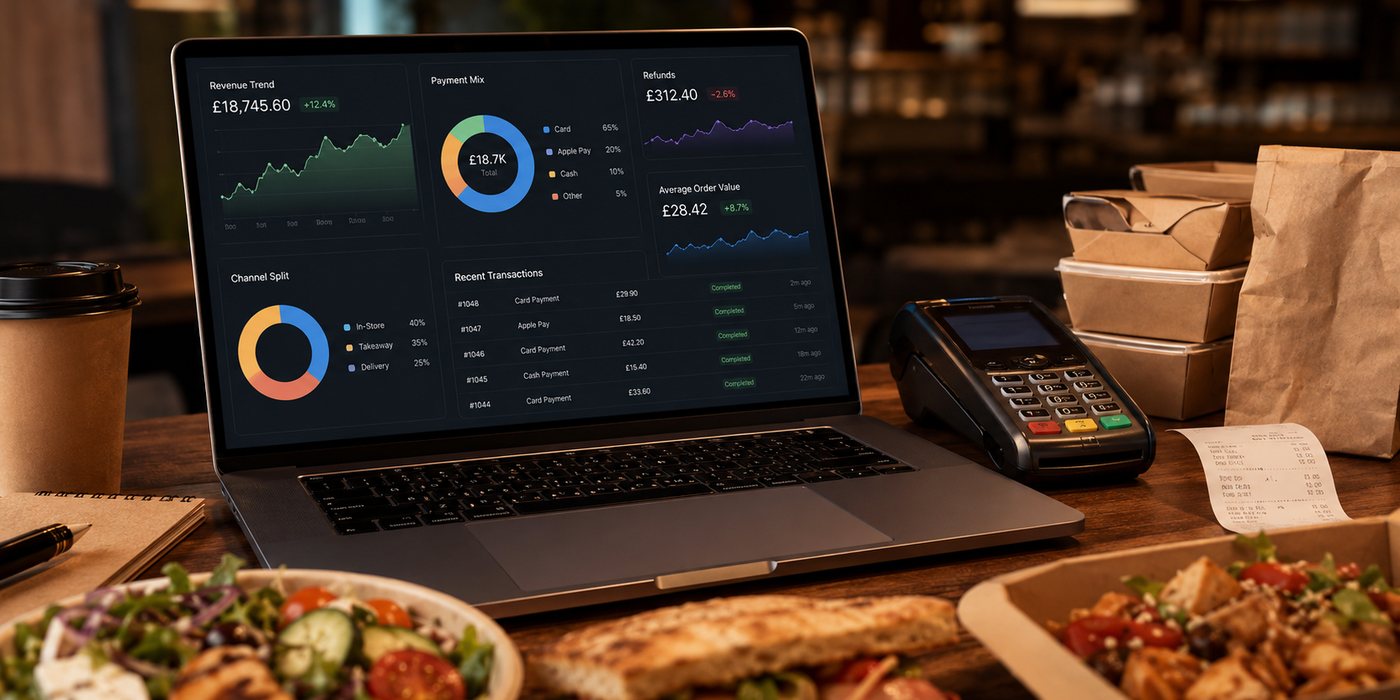
Marketplace payments should be treated as a settlement system, not as a simple bank deposit. The platform records the customer order, applies the commercial terms, processes or arranges payment under its model, makes adjustments and pays the restaurant a net amount. The restaurant needs to understand every stage from gross order value to payout.
Start with the agreement, not an assumed model
Different platforms and service arrangements can allocate payment, delivery, refunds, tax documentation and customer support differently. Confirm in the current agreement:
- which legal entity contracts with the restaurant;
- which entity takes or arranges the customer payment;
- what the restaurant is selling and to whom under the agreement;
- how commission or service charges are calculated;
- who provides delivery;
- who decides customer refunds and adjustments;
- how VAT and other tax documents are presented;
- when the restaurant is paid;
- what can be withheld, offset or corrected later.
Do not describe every marketplace as operating the same merchant-of-record or data-controller model. These positions are contract-specific.
The settlement flow
- The customer places and pays for an order through the platform.
- The platform sends the order to the restaurant.
- The restaurant accepts, prepares and hands over the order.
- The platform records completion, cancellation or complaint outcomes.
- Commission, delivery, promotion, refund and other adjustments are applied.
- A statement groups transactions into a settlement period.
- The platform pays the net amount to the restaurant.
- The restaurant reconciles the statement to orders and the bank.
What may appear on a statement
| Statement line | What to verify |
|---|---|
| Gross order value | Which items, VAT treatment and customer charges are included? |
| Commission or service charge | What is the calculation base and contractual rate? |
| Delivery-related amount | Who provided delivery and who receives the charge? |
| Promotion contribution | Who funded the discount and how was commission calculated? |
| Refund or adjustment | Which order and reason caused it? |
| Sponsored placement | Which campaign or billing period does it cover? |
| Equipment or subscription | Is the charge recurring or one-off? |
| Previous-period correction | Why was an earlier settlement changed? |
| Tax document | How should it be recorded in the restaurant’s books? |
| Net payout | Which bank deposit should match it? |
Commission is only one part of contribution
To assess marketplace contribution, consider:
- gross item revenue attributable to the restaurant;
- platform and payment-related charges;
- restaurant-funded promotions;
- food and packaging;
- restaurant-funded delivery;
- refunds, remakes and failed orders;
- incremental labour and support;
- sponsored visibility spend.
Do not compare a platform-delivered order with a direct collection order without showing the delivery and acquisition difference.
Refund and complaint allocation
For each complaint category, document:
- who communicates with the customer;
- who can authorise a refund;
- whether the restaurant can challenge the decision;
- what evidence is required;
- who bears the food, delivery and platform cost;
- whether commission is adjusted;
- when the change appears on a statement.
A platform refund and a restaurant redelivery may happen at the same time if teams do not communicate. Keep a central incident record to avoid compensating twice without understanding why.
Payout timing and cash flow
Record:
- settlement period;
- cut-off time;
- expected payment date;
- bank-reference format;
- minimum threshold;
- weekend and bank-holiday treatment;
- reserve, hold or account-review provisions;
- procedure for a missing payout.
Use the expected payout schedule in cash-flow planning, but retain enough working capital for delays and adjustments.
Reconcile every settlement period
- Export completed, cancelled and refunded orders.
- Match each order to the platform statement.
- Check contracted fees and promotion funding.
- Review adjustments from previous periods.
- Confirm the net payout.
- Match it to the bank deposit.
- Log unexplained items before the support deadline expires.
Do not wait until the end of the year. Marketplace queries are easier to resolve while order details and evidence are still available.
Tax and accounting
The bank deposit is not necessarily the value that should be recorded as sales. The accounting treatment depends on the agreement and the tax facts. Provide the accountant with:
- order-level sales reports;
- platform invoices and tax documents;
- promotion and refund detail;
- settlement statements;
- bank deposits;
- the current platform agreement.
Do not infer VAT treatment from whether a line appears as a deduction. Use current HMRC guidance and professional advice for the restaurant’s exact arrangement.
Monthly review
- Are statement rates consistent with the contract?
- Which deductions are growing?
- Which complaints lead to repeated adjustments?
- Are promotions producing incremental contribution?
- Are payouts arriving on schedule?
- Are support queries resolved within the platform deadline?
- Does the channel still provide useful reach or capacity utilisation?
Related guides
- Payments — the main guide for the wider topic.
- How Marketplace Payments Work — a detailed next step for putting this guidance into practice.
- How to Measure Marketplace Commission — a detailed next step for putting this guidance into practice.
- Channel Profitability — a closely related operational control to review alongside this page.
- Payment Gateway Fundamentals — a closely related operational control to review alongside this page.
Official guidance checked
Guidance checked: 24 July 2026. Platform payment roles, fee calculations, tax treatment and refund allocation must be checked against the current agreement and statements.