How Marketplace Payments Work
A marketplace order can appear simple to the restaurant: a ticket arrives, food is prepared and a net payment arrives later. Behind that process are separate records for the customer charge, restaurant sale, platform…
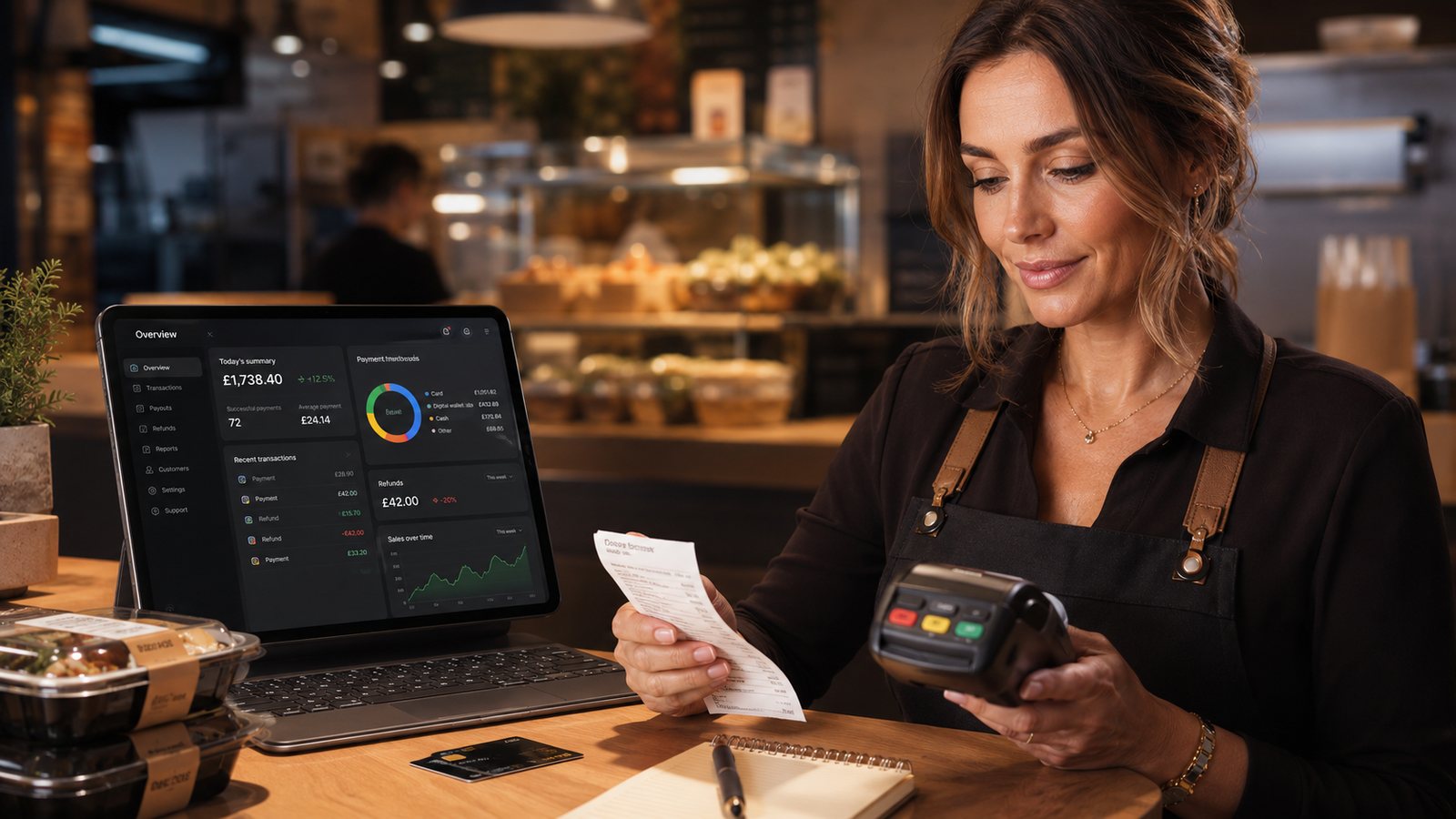
A marketplace order can appear simple to the restaurant: a ticket arrives, food is prepared and a net payment arrives later. Behind that process are separate records for the customer charge, restaurant sale, platform fees, delivery, promotions, refunds and settlement. Understanding those records prevents cash-flow surprises and accounting errors.
Do not assume every platform uses the same legal model
Before describing the flow, read the current partner agreement. Confirm:
- who contracts with the customer for each part of the order;
- who processes or arranges payment;
- who supplies delivery;
- who sets and collects customer fees;
- who decides refunds;
- which invoices and tax documents are issued;
- when the restaurant becomes entitled to payment.
Use the platform’s own defined terms. Labels such as “merchant of record” should not be applied universally without documentary support.
The typical operational sequence
- The customer confirms the basket and total on the marketplace.
- The platform processes the payment under its configured arrangement.
- The order is sent to the restaurant.
- The restaurant accepts or rejects it.
- The order is prepared and handed over for collection or delivery.
- Completion, cancellation, complaint and refund outcomes are recorded.
- The platform calculates the settlement.
- The net payout is transferred to the restaurant.
The customer payment time and restaurant payout time are different. The restaurant should not treat an accepted order as settled cash.
Gross order value and customer charges
Separate:
- menu item value;
- VAT treatment;
- delivery charge;
- service fee;
- small-order charge;
- tip;
- discount;
- other platform-defined amounts.
Not every amount shown to the customer belongs to the restaurant. The statement and agreement should explain who receives it and whether it affects commission.
Deductions before payout
| Deduction | Control |
|---|---|
| Commission or service charge | Recalculate the contractual basis on sample orders |
| Delivery-related charge | Confirm whether platform or restaurant delivery was used |
| Promotion funding | Identify restaurant-funded and platform-funded portions |
| Refund or customer adjustment | Match the reason and evidence to one order |
| Sponsored placement | Match to a campaign and billing period |
| Equipment or subscription | Check recurring and one-off terms |
| Previous correction | Trace it back to the original settlement |
Orders that do not settle normally
Create procedures for:
- customer payment accepted but restaurant rejects the order;
- restaurant accepts but the platform cancels;
- driver never collects;
- customer reports non-delivery;
- partial refund;
- full refund;
- suspected fraud;
- platform account review or payout hold.
The kitchen and customer-service teams need to know whether food should be prepared, remade or stopped. Finance needs to know where the adjustment will appear.
Payout statements
A useful statement should allow the restaurant to identify:
- settlement period;
- orders included;
- gross values;
- each fee category;
- refunds and adjustments;
- tax documents;
- net payout;
- payment date and bank reference.
Download reports regularly. Do not assume the platform will retain every detail indefinitely after account closure.
Reconciliation example
For an illustrative settlement only:
- Start with the gross value of included restaurant orders.
- Subtract contractual platform charges.
- Subtract restaurant-funded promotions.
- Add or subtract refunds and prior-period adjustments.
- Check any delivery, equipment or advertising lines.
- Confirm that the resulting net amount matches the payout.
If it does not match, do not create an unexplained accounting adjustment. Trace the difference to an order, fee or statement line and raise a support case where necessary.
Who owns the customer relationship?
Payment processing does not by itself answer who may use customer data. The platform agreement and privacy information define what data the restaurant receives and for which purposes. Do not use details supplied for fulfilment as a direct-marketing list unless the restaurant has a valid basis and has met the relevant transparency and marketing rules.
Daily operational controls
- Check that marketplace orders accepted by the restaurant appear in the order log.
- Record rejected and cancelled orders with reasons.
- Keep evidence for missing items, delivery handover and complaints.
- Log any manual refund or redelivery.
- Escalate tablet, integration or payout issues to the correct provider.
Settlement-period controls
- Match orders to the statement.
- Recalculate fees on samples.
- Review promotions and refunds.
- Match the net payout to the bank.
- Record unresolved adjustments and support deadlines.
- Provide complete reports to the bookkeeper or accountant.
Related guides
- Payments — the main guide for the wider topic.
- Marketplace Payments and Commission — the broader guide that frames this implementation.
- Marketplace Payout Issues — a closely related operational control to review alongside this page.
- How to Measure Marketplace Commission — a closely related operational control to review alongside this page.
Official guidance checked
Guidance checked: 24 July 2026. The marketplace agreement and current partner statements are the primary sources for payment flow, deductions and payout timing.
Operational, legal and platform requirements can change. Recheck official guidance and supplier documentation before altering a live service.
Related practical guides
 PaymentsHow to Set Up Digital ReceiptsA digital receipt should give the customer a reliable record without creating a new privacy problem or weakening the restaurant’s accounting trai…Read guide →PaymentsHow to Measure Marketplace CommissionThe headline commission percentage is not the same as the total cost of a marketplace order. To measure the channel properly, use order-level sta…Read guide →
 PaymentsHow to Calculate Contribution Margin by Ordering ChannelContribution margin shows what remains after the costs that change with, or are avoidable because of, an order. It is useful for channel and pric…Read guide →PaymentsHandling Refunds for Online OrdersA refund process should be fast enough to treat the customer fairly and controlled enough to prevent duplicates, fraud and accounting gaps. The r…Read guide →
 PaymentsFraud Prevention for Online OrdersFraud prevention should combine payment-provider controls, secure staff access, proportionate order review and a documented response to suspiciou…Read guide →PaymentsData Protection for Payment InformationA payment transaction can involve more personal data than a card number. Names, delivery addresses, phone numbers, email addresses, order history…Read guide →
Connect customer ordering with operations and profit
Use the wider guide library to check the menu, kitchen, fulfilment, payment and financial implications of each decision.
Browse all practical guides