Compliance for a digital takeaway is not a single website checkbox. It links food safety, product information, customer pricing, employment, privacy, payments, tax records and supplier control. This hub provides an operating map, not a substitute for advice on a specific legal question.
Build one compliance register
| Area | Core evidence | Operational owner |
|---|---|---|
| Food safety and allergens | Recipes, supplier specifications, allergen matrix, training and incident log | Food business operator or designated manager |
| Food information | Product classification, labels, online display and delivery-stage information | Menu-data owner |
| Hygiene rating | Current official rating, inspection record and improvement plan | Premises manager |
| Consumer pricing | Item prices, mandatory charges, promotion terms and checkout tests | Commercial owner |
| Employment and road safety | Status assessment, pay/time records, training, vehicle and risk checks | Employer or engager |
| Customer data | Data map, privacy notice, contracts, rights log and incident process | Controller representative |
| Payments and records | Provider agreement, PCI responsibilities, settlements and accounting trail | Finance and system owner |
Food safety remains operational
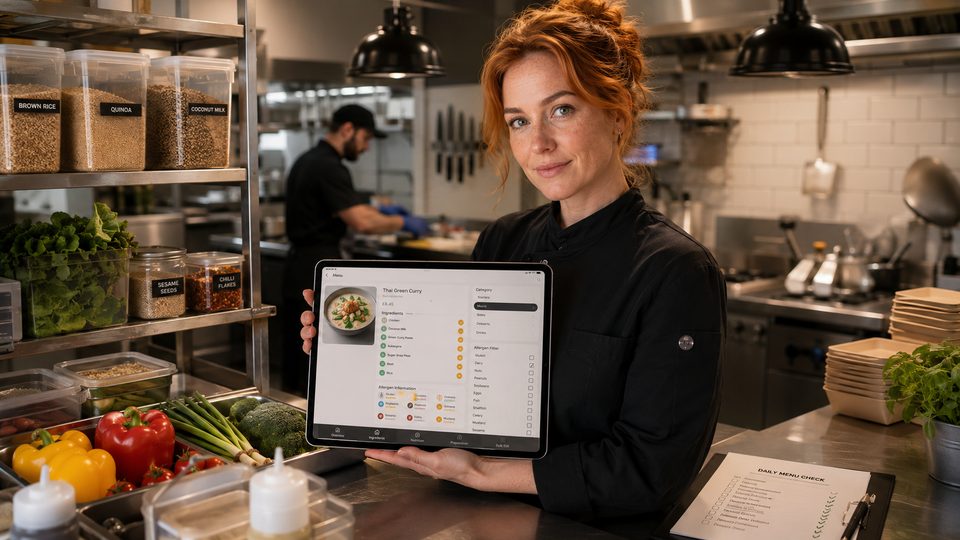
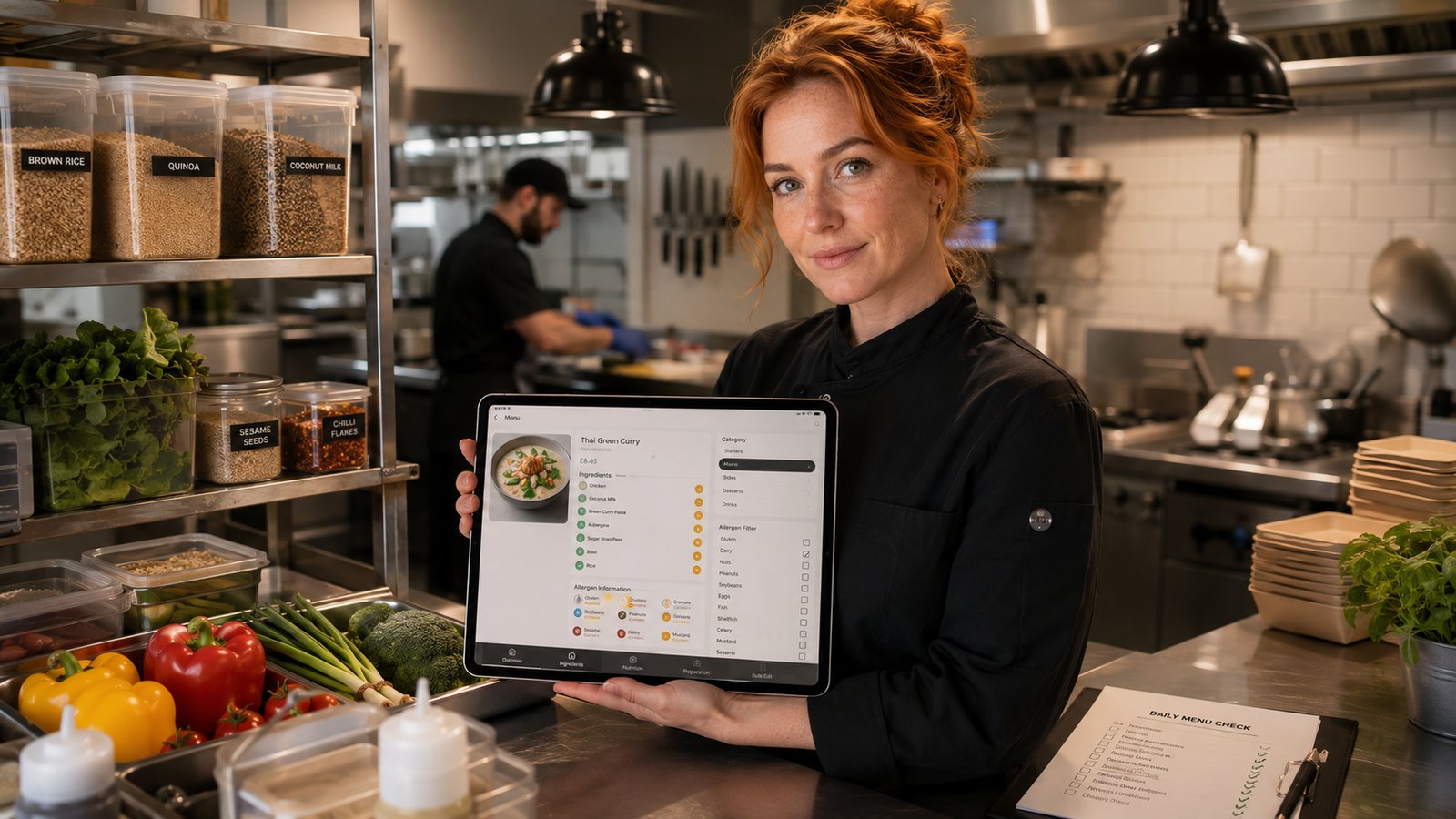
A digital menu cannot replace approved recipes, hygiene procedures, cross-contact controls or trained staff. Allergen information for distance orders must be reliable before purchase and at delivery. If a recipe, supplier or substitute changes, the business must control the change across every channel and kitchen output.
Do not overstate hygiene ratings
Food hygiene ratings reflect standards found at inspection; they are not a guarantee of food quality or a permanent certificate. Display the current official result accurately and distinguish the Food Hygiene Rating Scheme used in England, Wales and Northern Ireland from Scotland's Food Hygiene Information Scheme.
Make prices realistic and attainable
Show unavoidable charges early enough for a customer to make an informed decision. Do not advertise a meal at one price and add a mandatory packaging, booking or service fee only at the final stage. Promotions need significant conditions, eligibility and limits stated clearly. Optional tips must not be preselected or presented as unavoidable.
Control people and suppliers
Assess delivery-driver arrangements from actual working practices. Pay, working time, holiday, pensions and other rights depend on status and circumstances. Road safety duties can extend beyond employees. For digital suppliers, record controller/processor roles, service levels, subcontractors, data locations, security responsibilities, exports and exit support.
Maintain evidence, not just policies
- Versioned menu and allergen data
- Completed staff training and competence checks
- Checkout screenshots and test orders
- Supplier contracts and current terms
- Access and change logs
- Complaint, refund and incident records
- Settlement and accounting reconciliation
- Review dates and named owners
Use a change gate
New items, suppliers, delivery areas, payment providers, marketing channels and employment models should pass a short review before launch. The gate should identify affected information, risks, required tests, approvers, fallback and evidence. Urgent commercial pressure is not a reason to skip allergen, price or payment controls.
Practical next step
Create a compliance register with one row per duty, official source, responsible owner, evidence location, review date and escalation route. Start with the eight areas above and remove any policy that has no operating evidence behind it.
Related guides
- Business Planning and Finance — the main guide for the wider topic.
- Data Protection for Restaurant Customer Data — a detailed next step for putting this guidance into practice.
- Employment Law for Delivery Drivers — a detailed next step for putting this guidance into practice.
- Pricing and Margin Management — a closely related operational control to review alongside this page.
- Budget Planning for Digital Investment — a closely related operational control to review alongside this page.
- Online Compliance and Food Safety — a connected decision that can change the recommended approach.
Sources and date checked
Guidance checked: 24 July 2026. Recheck official guidance, local requirements and supplier documentation before changing a live operation.