Delivery During Busy Periods
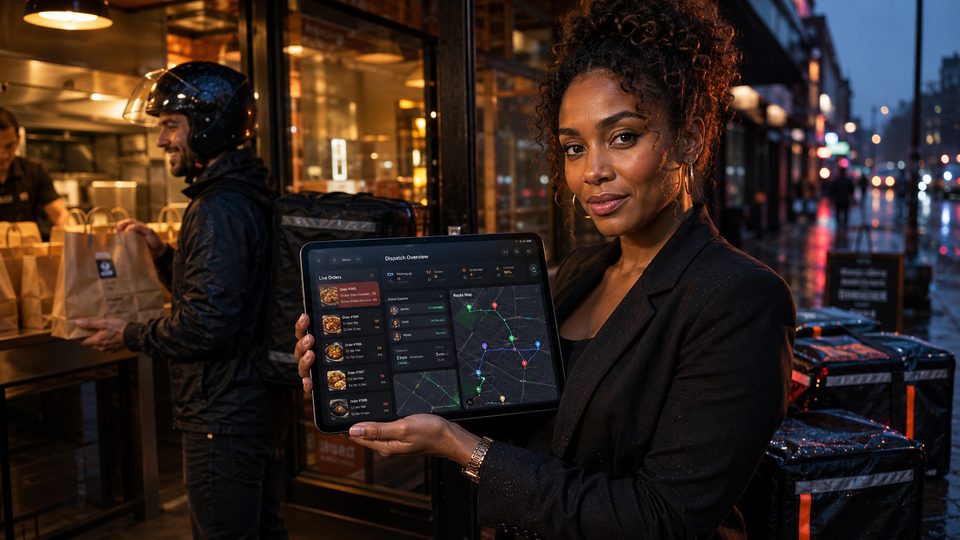
Busy-period delivery should be controlled as one system with the kitchen. Adding drivers alone will not solve a queue that is already late before handover.
Busy-period delivery should be controlled as one system with the kitchen. Adding drivers alone will not solve a queue that is already late before handover.
Prepare from ranges, not a single forecast
Use recent comparable shifts, promotions, events, weather and staffing to define a likely range. Plan actions for normal, stretched and critical demand. The purpose is not perfect prediction; it is earlier, calmer decisions.
Set shared capacity states
| State | Operational signs | Typical response |
|---|---|---|
| Green | Orders ready close to plan; driver cover stable | Normal zones and promises |
| Amber | Ready-order waiting or driver assignment begins to slip | Extend promises, limit promotions, reduce grouping |
| Red | Kitchen backlog, unassigned orders or unsafe pressure | Pause remote zones or channels and communicate delays |
Protect the handover point
- Use one owner for ready-order release.
- Keep customer collections separate from driver waiting where possible.
- Do not mark orders ready to improve a dashboard.
- Verify bag count and address before release.
- Record driver arrival and actual departure.
Control every channel together
A takeaway that throttles its website but leaves marketplace, telephone and walk-in demand unrestricted has not controlled capacity. Use a single view of kitchen and delivery load, while respecting the controls available on each channel.
Communicate before failure
Extend the promise before the customer pays when possible. After acceptance, notify customers of a material change and give realistic options. Do not send repeated optimistic ETAs that the operation cannot support.
Keep road safety outside performance pressure
Do not reward speeding, phone use while moving or unsafe route grouping. Severe congestion or weather may require a reduced zone even when demand is commercially attractive.
Recover deliberately
Return from red to amber and green only after the oldest orders, driver queue and kitchen backlog are under control. Reopening every channel at once can recreate the incident. Review ready-to-dispatch waiting, late orders, complaints, remakes and driver overtime after the shift.
Use operational triggers rather than intuition
| Signal | Amber response | Red response |
|---|---|---|
| Kitchen queue beyond safe promise | Extend slots and reduce promotion | Pause affected fulfilment options |
| Unassigned delivery orders rising | Reduce outer-zone capacity | Close zones that cannot be served credibly |
| Packing or handover backlog | Add a checker and simplify grouping | Stop new delivery demand until recovered |
| Unsafe weather or road condition | Increase promises and review routes | Stop dispatch where the risk cannot be controlled |
Set the thresholds from the business’s normal operation and test them. Do not copy a universal order count from another kitchen.
Protect order quality while throttling demand
Capacity controls should operate across marketplace, website, app and telephone orders. If only the direct channel is paused, marketplace orders may continue to overload the same kitchen. Decide which products, zones, slots or promotions can be restricted with the least operational disruption.
Manage the recovery period
Do not reopen every zone and channel as soon as the visible queue falls. Confirm that delayed orders have left the kitchen, drivers have returned, outstanding customer contacts are owned and the next wave can be accepted safely. Record when controls were applied and released so the team can improve the trigger next time.
Review the economics of the peak
High sales can conceal poor contribution after refunds, discounts, extra labour, third-party driver charges and redeliveries. Review successful completion and customer impact, not revenue alone.
Related guides
- Delivery Management — the main guide for the wider topic.
- Peak Period Delivery Management — the broader guide that frames this implementation.
- Weather and Seasonal Delivery Challenges — a closely related operational control to review alongside this page.
Sources and recheck points
Guidance checked: 24 July 2026. Recheck official guidance and supplier documentation before changing a live process.
Operational, legal and platform requirements can change. Recheck official guidance and supplier documentation before altering a live service.
Related practical guides
 Delivery ManagementHow to Plan Driver TrackingDriver tracking should begin with a documented operational need, not a map feature. This method helps a takeaway choose the minimum system needed…Read guide →Delivery ManagementHow to Plan Delivery MinimumsA delivery minimum should protect the economics of the journey without forcing customers into an unsuitable basket. It is one control among sever…Read guide →Delivery ManagementHow to Manage Multiple Delivery ZonesMultiple zones allow a takeaway to reflect different journey times, costs and service levels. They also create more opportunities for configurati…Read guide →
 Delivery ManagementDelivery Route OptimisationRoute optimisation should improve completed-delivery cost and reliability without encouraging unsafe driving or excessive order grouping. The sys…Read guide →Delivery ManagementDelivery Pricing ModelsA delivery charge should be a deliberate part of the commercial model, not a copy of a competitor’s checkout. The right structure depends on zone…Read guide →Delivery ManagementEmploying Delivery DriversTaking on delivery drivers creates more than a rota. The business needs a lawful working arrangement, safe journeys, suitable vehicles, clear pay…Read guide →
Connect customer ordering with operations and profit
Use the wider guide library to check the menu, kitchen, fulfilment, payment and financial implications of each decision.
Browse all practical guides