Managing Delivery Density
Delivery density is the concentration of compatible orders in an area and time period. It can improve driver utilisation, but it should not be reduced to a target number of drops per hour. The useful question is wheth…
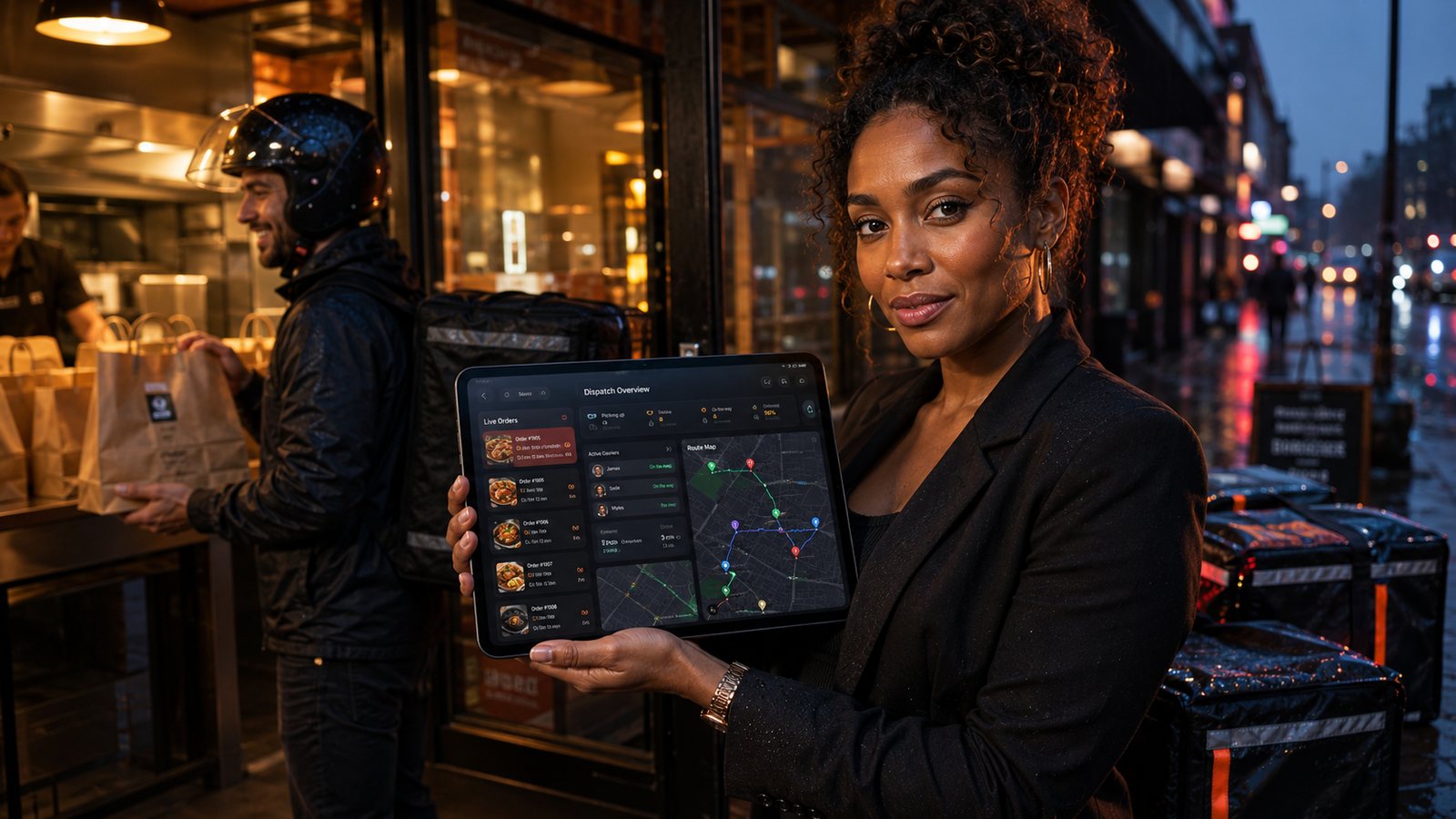
Delivery density is the concentration of compatible orders in an area and time period. It can improve driver utilisation, but it should not be reduced to a target number of drops per hour. The useful question is whether the business can complete reliable journeys with acceptable cost and food quality.
Measure density by time and place
Map completed orders by postcode sector and short service period. Add journey time, driver paid time, failed delivery and contribution. A zone may be dense on Friday evening and uneconomic on a quiet Tuesday.
Distinguish demand from compatible demand
Orders are compatible when their ready times, promises, destinations, bag capacity and food characteristics allow safe grouping. Five orders in one area are not useful density if they become ready forty minutes apart.
Improve density without misleading customers
- offer defined delivery slots in low-density areas;
- restrict outer-zone availability to periods with proven demand;
- use honest pre-order windows;
- promote direct ordering in areas already served reliably;
- avoid discounts that create scattered, low-contribution demand;
- consider collection as an alternative when a journey is not viable.
Manage remote postcodes deliberately
| Option | Suitable when |
|---|---|
| Higher minimum or fee | Demand exists and the full price remains acceptable |
| Restricted time slots | Orders can be grouped predictably |
| Third-party capacity | Provider coverage is reliable and costed |
| Collection only | Delivery cannot be fulfilled safely or profitably |
| Remove the area | Failures and costs persist after testing |
Avoid density metrics that encourage harm
Do not create driver targets that reward unsafe speed, missed checks or excessive batching. Pair density with promised arrival, complaints, driver incidents and redeliveries. A denser route is only an improvement if the whole outcome remains reliable.
Review after operational changes
New menu items, packaging, road closures, school terms, marketplace promotions and additional channels can change the pattern. Recalculate rather than treating the original zone as permanent.
Coordinate density with kitchen capacity
A promotion can create concentrated demand that the kitchen cannot complete together. Measure ready-time spread as well as order geography. If several nearby orders leave at different times because preparation is unstable, the expected route benefit disappears.
Use incentives carefully
Time-limited delivery slots or area-specific promotions can build density, but publish material terms clearly and model the combined discount, delivery cost and kitchen load. Avoid training customers to wait for an uneconomic offer or creating demand in an area that cannot be served consistently.
Keep an exit rule for low-density coverage
Define the evidence that will trigger restriction or removal, such as persistent negative contribution, repeated late arrival or lack of compatible demand. Communicate changes clearly and preserve collection or later-slot alternatives where practical.
Separate growth from fulfilment evidence
Marketing reports may show demand in a postcode, but operational expansion should use completed-order evidence. Before widening coverage, pilot limited slots and measure the return journey, driver availability and effect on existing customers.
Record temporary experiments separately from permanent coverage so staff apply the correct rule.
Practical next step: identify three postcode sectors with the highest and lowest completed-order density, then compare contribution and reliability before changing marketing or coverage.
Related guides
- Delivery Management — the main guide for the wider topic.
- Route Planning and Efficiency — the broader guide that frames this implementation.
- Delivery Route Optimisation — a closely related operational control to review alongside this page.
Operational, legal and platform requirements can change. Recheck official guidance and supplier documentation before altering a live service.
Related practical guides
 Delivery ManagementPackaging Costs and Margin ImpactMeasure packaging by usable order configuration and failure cost, not only by the supplier price of an individual container.Read guide →
 Delivery ManagementLive Order Tracking for CustomersCustomer tracking should reduce uncertainty, not create a false promise. A simple, accurate sequence of statuses can be more useful than a moving…Read guide →Delivery ManagementHow to Reduce Failed DeliveriesReduce failed deliveries by improving the order before dispatch, making promises from real capacity and giving drivers a safe, consistent excepti…Read guide →Delivery ManagementHow to Plan Driver TrackingDriver tracking should begin with a documented operational need, not a map feature. This method helps a takeaway choose the minimum system needed…Read guide →Delivery ManagementHow to Plan Delivery MinimumsA delivery minimum should protect the economics of the journey without forcing customers into an unsuitable basket. It is one control among sever…Read guide →Delivery ManagementHow to Manage Multiple Delivery ZonesMultiple zones allow a takeaway to reflect different journey times, costs and service levels. They also create more opportunities for configurati…Read guide →
Connect customer ordering with operations and profit
Use the wider guide library to check the menu, kitchen, fulfilment, payment and financial implications of each decision.
Browse all practical guides