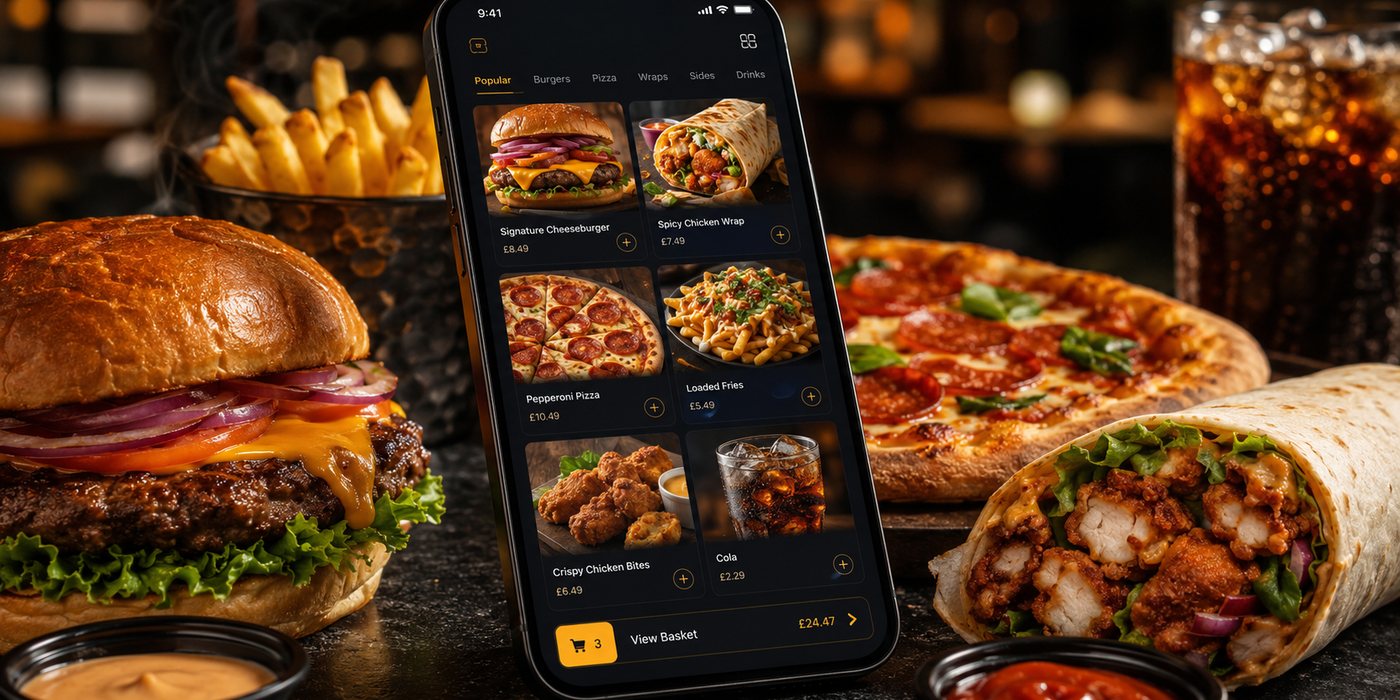
Live Order Tracking for Customers
Customer tracking should reduce uncertainty, not create a false promise. A simple, accurate sequence of statuses can be more useful than a moving map that is delayed, misleading or intrusive. Design the feature around…
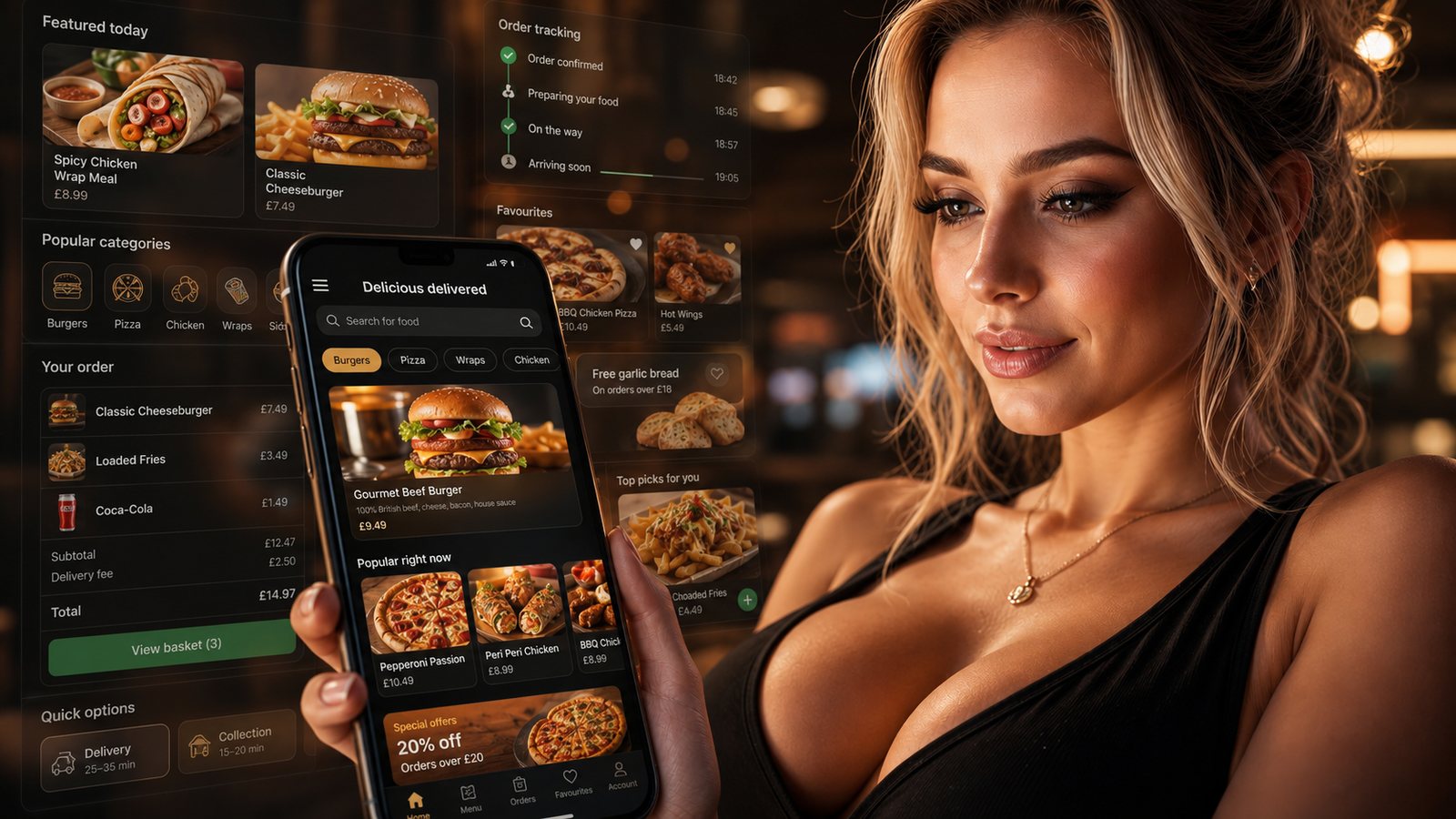
Customer tracking should reduce uncertainty, not create a false promise. A simple, accurate sequence of statuses can be more useful than a moving map that is delayed, misleading or intrusive. Design the feature around the questions customers actually have: was the order accepted, is it being prepared, has it left and what should they do if it is late?
Use statuses with clear ownership
| Status | What it should mean | Who triggers it |
|---|---|---|
| Order received | The system has the request, not necessarily kitchen acceptance | Ordering system |
| Accepted | The business has committed to fulfil it | Restaurant |
| Preparing | Kitchen work has started or is in the active queue | Kitchen workflow |
| Ready | The order is complete and checked | Pass or packing lead |
| On the way | The driver has collected and departed | Driver or verified dispatch event |
| Delivered | The handover or approved completion event occurred | Driver |
Choose the right level of precision
Options include status only, an estimated range, coarse journey progress or a live map. Use the least intrusive model that delivers a meaningful benefit. An exact dot can be unreliable around dense streets and may expose the driver’s movements beyond what the customer needs.
Build the estimate from real stages
The estimate should combine kitchen workload, preparation, packing, assignment and travel. Update it when a meaningful event changes the outcome. Avoid repeatedly moving the time forward without explanation. If the promise becomes unreliable, provide a clear delay message and contact route.
Protect the tracking link
- Use an unguessable, order-specific link.
- Do not expose unrelated customer or driver information.
- Expire access after a defined period.
- Avoid exposing precise historical routes.
- Test what happens if the link is forwarded.
- Provide a non-map alternative for accessibility.
Handle imperfect tracking honestly
If GPS is unavailable, fall back to verified statuses and a time range. Do not freeze a marker and imply live accuracy. If a third-party provider supplies the tracking page, confirm who supports the customer when the position or status is wrong.
Measure the value
Track customer “where is my order?” contacts, link use, complaints about inaccurate status, late-delivery contacts and support effort. A feature that looks impressive but increases confusion should be simplified.
Provide accessible support
Do not make the tracking page the only route to help. It should work on mobile without forcing an app installation, use text as well as colour, and remain understandable without a map. Provide an order-specific contact option for a material delay, but avoid encouraging repeated calls for ordinary progress.
Set supplier responsibilities
Confirm who corrects a wrong status, disables a compromised link and answers a privacy complaint. If the customer page is operated by a delivery provider, the takeaway still needs a practical escalation path and should not promise functionality it cannot support.
Practical next step: test the customer journey using a delayed kitchen order, a late driver, weak GPS and a forwarded tracking link before releasing live maps publicly.
Official UK privacy guidance
- Information Commissioner’s Office: Monitoring workers
- Information Commissioner’s Office: Specific considerations for worker monitoring
Guidance checked: 24 July 2026. The ICO notes that monitoring guidance is under review following legislative change, so tracking arrangements should be rechecked before implementation or material expansion.
Related guides
- Delivery Management — the main guide for the wider topic.
- Driver Tracking and Communication — the broader guide that frames this implementation.
- How to Plan Driver Tracking — a closely related operational control to review alongside this page.
- Driver Communication Systems — a closely related operational control to review alongside this page.
Operational, legal and platform requirements can change. Recheck official guidance and supplier documentation before altering a live service.
Related practical guides
 Delivery ManagementPackaging Costs and Margin ImpactMeasure packaging by usable order configuration and failure cost, not only by the supplier price of an individual container.Read guide →
 Delivery ManagementManaging Delivery DensityDelivery density is the concentration of compatible orders in an area and time period. It can improve driver utilisation, but it should not be re…Read guide →
 Delivery ManagementHow to Reduce Failed DeliveriesReduce failed deliveries by improving the order before dispatch, making promises from real capacity and giving drivers a safe, consistent excepti…Read guide →Delivery ManagementHow to Plan Driver TrackingDriver tracking should begin with a documented operational need, not a map feature. This method helps a takeaway choose the minimum system needed…Read guide →Delivery ManagementHow to Plan Delivery MinimumsA delivery minimum should protect the economics of the journey without forcing customers into an unsuitable basket. It is one control among sever…Read guide →Delivery ManagementHow to Manage Multiple Delivery ZonesMultiple zones allow a takeaway to reflect different journey times, costs and service levels. They also create more opportunities for configurati…Read guide →
Connect customer ordering with operations and profit
Use the wider guide library to check the menu, kitchen, fulfilment, payment and financial implications of each decision.
Browse all practical guides