How Restaurant Loyalty Apps Work
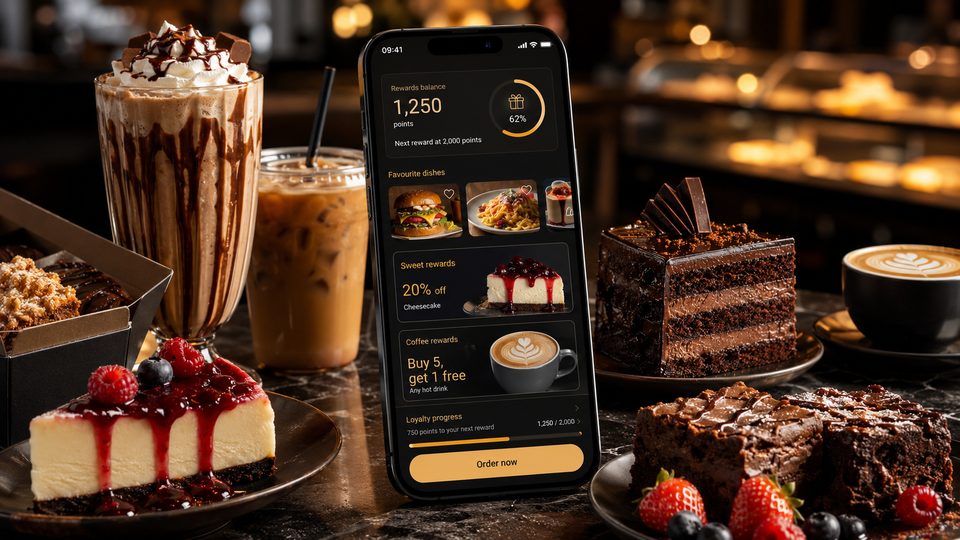
A loyalty app records eligibility, earning and redemption against a customer account. The visible reward is only one part of a system that also needs identity, liability, fraud control, refunds and support.

A loyalty app records eligibility, earning and redemption against a customer account. The visible reward is only one part of a system that also needs identity, liability, fraud control, refunds and support.
Map the loyalty transaction
- Identify the customer account.
- Confirm the qualifying order and exclusions.
- Post points, stamps, credit or progress.
- Display the balance and relevant expiry.
- Validate a redemption.
- Adjust the balance after refund, cancellation or staff correction.
- Reconcile the loyalty liability and investigate exceptions.
Compare common mechanics
| Mechanic | Strength | Main control |
|---|---|---|
| Digital stamps | Simple and understandable for frequent purchases | Define qualifying purchase and duplicate prevention |
| Points | Flexible across basket values | Keep value and rounding transparent |
| Cashback or credit | Strong perceived value | Treat outstanding credit as a liability |
| Tiered benefits | Can recognise sustained use | Avoid complexity and unfair service promises |
| Personalised rewards | Potentially more relevant | Explain profiling and avoid sensitive inference |
Connect loyalty to the real order record
The scheme should use stable order IDs and documented status rules. Decide whether rewards are posted at payment, acceptance or completion. Completion is usually safer because rejected or refunded orders should not create permanent value without a deliberate policy.
Handle refunds and corrections
Test full and partial refunds, cancelled items, marketplace orders, offline operation and merged accounts. Give staff limited correction permissions and keep an audit trail. Customers need a clear route to challenge a missing or incorrect balance.
Separate programme operation from marketing
An account may be necessary to operate the loyalty balance, but that does not automatically justify promotional email, text or push. Ask for and record channel preferences separately, and honour objections through a suppression process.
Measure programme health
- Active members who completed a qualifying order.
- Earning-to-redemption pattern.
- Outstanding reward liability.
- Repeat contribution compared with a sensible baseline.
- Fraud and manual-adjustment rate.
- Support contacts and account-deletion requests.
Practical decision
Choose the simplest mechanic customers and staff can understand. Add tiers or personalisation only after the basic ledger, refunds and support work reliably.
Test account edge cases
Include guest-to-account conversion, changed phone number, duplicate accounts, shared household details, offline earning, delayed order completion and deletion requests. Decide which records can be merged and require human review where preferences or balances conflict.
Control supplier access
Limit who can alter balances, earning rules and expiry. Require audit exports and alerts for high-value manual adjustments. When an agency or staff member leaves, remove access promptly and review recent changes.
Plan migration and continuity
Export balances and transaction history regularly. Test whether a replacement system can import customers, balances, expiry and consent without changing meaning. During an outage, avoid issuing unrecorded rewards that later cannot be reconciled; use a controlled manual log and post corrections visibly.
Explain balances clearly
Customers should be able to see how value was earned, adjusted and redeemed. Use dates, order references and plain descriptions. Avoid unexplained expiry or a balance that changes only after contacting support.
Related guides
- Restaurant Marketing and Customer Retention — the main guide for the wider topic.
- Loyalty and Retention Strategy — the broader guide that frames this implementation.
- Restaurant Loyalty and Retention Guide — a closely related operational control to review alongside this page.
- Loyalty Programme Design — a closely related operational control to review alongside this page.
Sources and date checked
Guidance checked: 24 July 2026. Recheck supplier pricing, platform terms and regulatory guidance before acting.
Operational, legal and platform requirements can change. Recheck official guidance and supplier documentation before altering a live service.
Related practical guides
 Restaurant Marketing and Customer RetentionDealing with Fake or Unfair ReviewsA review can be inaccurate, abusive or unrelated to a genuine order without being easy to remove. The correct response is to preserve evidence, u…Read guide →Restaurant Marketing and Customer RetentionCustomer Segmentation for TakeawaysCustomer segmentation is useful when it changes a real decision: which message to send, which service problem to fix or which offer to test. It b…Read guide →Restaurant Marketing and Customer RetentionConverting Marketplace Customers to DirectThe phrase “converting marketplace customers” can encourage the wrong approach. A takeaway should not treat marketplace order details as a market…Read guide →Restaurant Marketing and Customer RetentionBuilding an Email List from OrdersAn order can create a customer relationship, but it does not automatically create unlimited permission to send marketing emails. List growth must…Read guide →
 Restaurant Marketing and Customer RetentionRestaurant SMS Marketing RulesThe safest SMS programme is built around evidence, clear identity and rapid respect for customer preference. A phone number collected for deliver…Read guide →Restaurant Marketing and Customer RetentionHow Push Notifications Increase Repeat OrdersPush does not create loyalty on its own. It can make a relevant return journey easier when the customer already has a reason to order and the ope…Read guide →
Connect customer ordering with operations and profit
Use the wider guide library to check the menu, kitchen, fulfilment, payment and financial implications of each decision.
Browse all practical guides