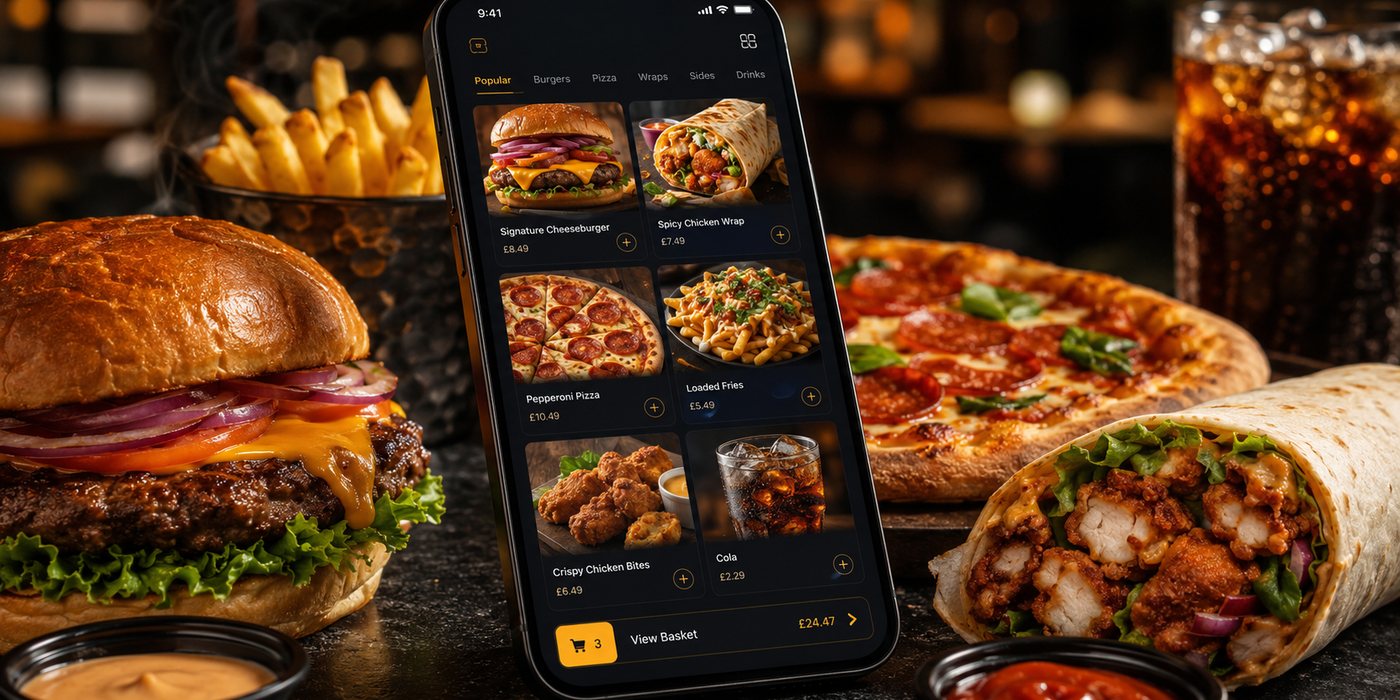
Choosing a Payment Gateway for Online Orders
The cheapest quoted transaction rate is not necessarily the cheapest gateway for a takeaway. A payment service that creates duplicate charges, delays refunds or cannot be reconciled with orders will consume staff time…
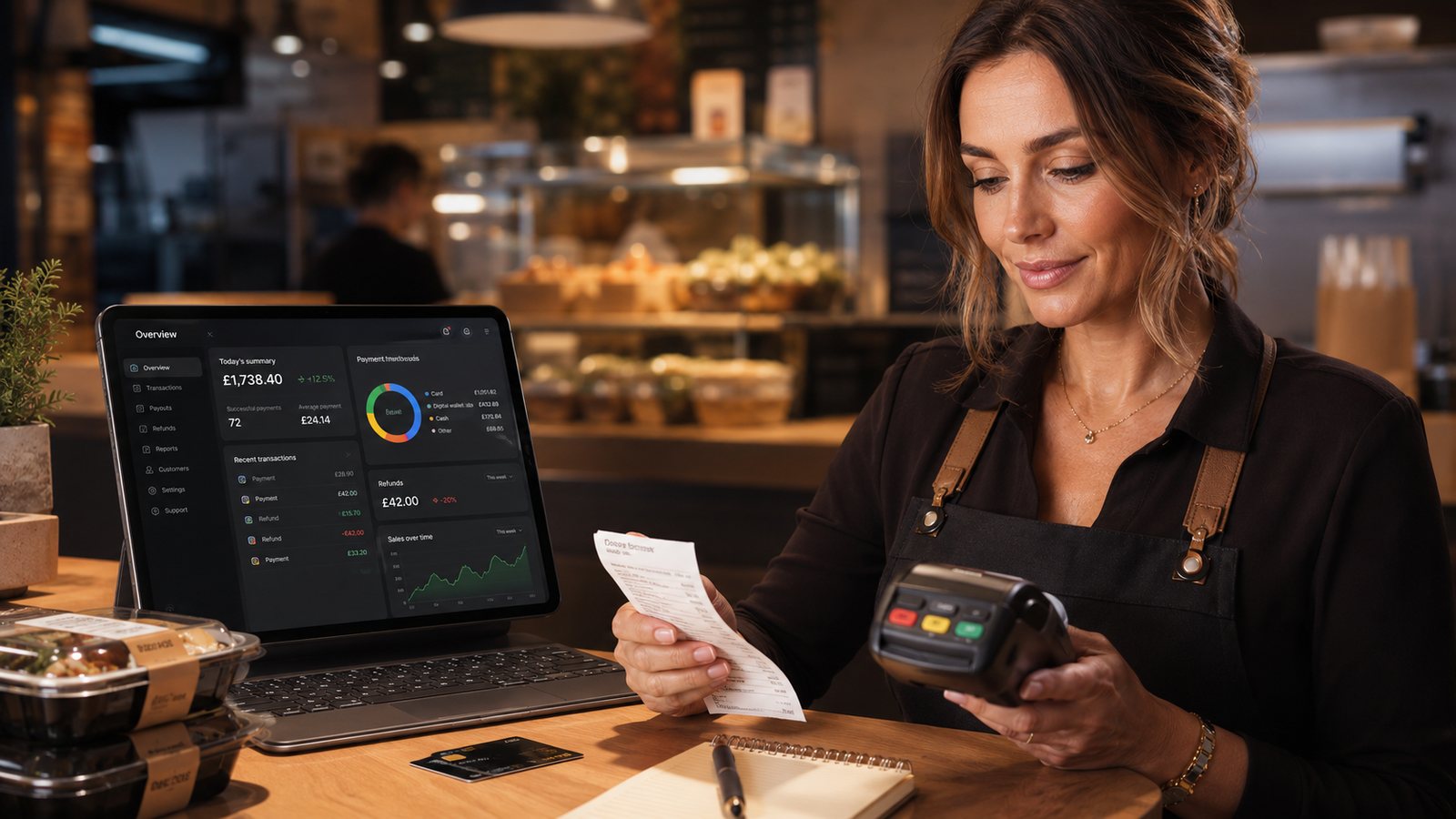
The cheapest quoted transaction rate is not necessarily the cheapest gateway for a takeaway. A payment service that creates duplicate charges, delays refunds or cannot be reconciled with orders will consume staff time and damage trust. Choose the gateway by testing the complete order-to-bank process.
Start with the existing ordering system
Before comparing providers, ask the ordering supplier:
- Which gateways are supported without custom development?
- Who owns and supports the integration?
- Can the restaurant hold its own merchant account?
- Which payment methods work through each integration?
- How are delayed callbacks and duplicate submissions handled?
- Do refunds update the order record automatically?
- Which transaction and settlement references are stored?
- Can the gateway be changed later without rebuilding checkout?
A provider with a strong general reputation may still be a poor choice if the restaurant’s ordering platform has a weak or outdated integration.
Define the required payment journey
Document the intended flow for:
- delivery and collection;
- guest and account checkout;
- cards and digital wallets;
- tips;
- discounts and gift credit where used;
- partial and full refunds;
- orders rejected after payment;
- pre-orders;
- payment failure and retry.
Do not add methods or features that the order system cannot report and support reliably.
Compare the full cost
| Cost | What to ask |
|---|---|
| Transaction pricing | What percentage and fixed charge apply to each card or method? |
| Monthly charges | Are there platform, account, minimum-use or statement fees? |
| Refunds | Is the original fee returned? Is there an additional refund charge? |
| Disputes | What chargeback or retrieval fees apply? |
| Settlement | Are faster payouts optional and charged? |
| Hardware | Are terminals, setup or replacement devices included? |
| Integration | Does the ordering supplier add its own payment fee? |
| Support | Is enhanced support charged separately? |
| Reserve and holds | Can funds be retained, and under what conditions? |
Apply each proposal to recent order values and payment-method mix. Do not compare one provider’s headline domestic-card rate with another provider’s blended real cost.
Check checkout quality
Test the gateway on the devices customers actually use. Review:
- mobile loading speed;
- wallet availability;
- clarity of authentication steps;
- return to the restaurant confirmation page;
- error messages;
- accessibility and keyboard operation;
- behaviour when the customer loses connection;
- protection against duplicate payment attempts.
A small difference in the checkout screen matters less than a reliable result and a clear recovery path.
Confirm payment security responsibilities
Ask the provider or acquirer:
- Which PCI DSS validation route applies?
- Does the restaurant’s website host, redirect to or embed the payment page?
- What must be maintained on the restaurant website?
- How are checkout scripts controlled and monitored?
- Who handles suspected payment-data compromise?
- Which security notifications and logs are available?
Do not accept “the gateway handles PCI” as a complete answer. The scope depends on the technical implementation and the merchant agreement.
Review reporting before signing
Request a demonstration of:
- transaction search;
- order and payment references;
- refund history;
- chargeback notifications;
- fee reports;
- settlement reports;
- bank deposit references;
- CSV or accounting exports;
- user roles and audit logs.
Reporting should allow a staff member or accountant to explain every difference between gross orders and the bank deposit.
Settlement and financial resilience
Check:
- standard settlement delay;
- weekend and bank-holiday handling;
- minimum payout amount;
- reserve or rolling hold provisions;
- negative balance treatment;
- what happens after an unusual sales spike;
- notification before account restrictions where permitted;
- how funds are handled if the account is closed.
A new takeaway should not plan payroll or supplier payments on the assumption that every card sale reaches the bank the next day.
Support must match trading hours
Ask whether support is available during evenings and weekends, when the restaurant is most exposed. Confirm the escalation route for a complete payment outage and for a payment/order mismatch.
Contract and exit
Review:
- minimum term;
- notice period;
- price-change rights;
- data export;
- ownership of stored customer payment tokens;
- migration of recurring or saved-payment arrangements where relevant;
- fees after termination;
- access to historical reports.
Saved payment tokens often cannot simply be moved between providers. Do not promise customers a seamless migration until both providers have confirmed what is possible.
Run a controlled pilot
- Configure the gateway in a test or restricted environment.
- Run successful, declined, interrupted and duplicate-attempt scenarios.
- Test each supported method.
- Process full and partial refunds.
- Confirm that staff can find payment status without seeing full card data.
- Reconcile the first settlement to orders and fees.
- Observe support response to a real low-risk query.
- Expand only after the process is stable.
Gateway scorecard
| Area | Suggested evidence |
|---|---|
| Integration | Test results and responsibility map |
| Customer journey | Mobile checkout tests |
| Cost | Calculation using recent order values |
| Security | Written PCI and incident responsibilities |
| Settlement | Sample statement and payout schedule |
| Refunds and disputes | Demonstrated workflow and fees |
| Reporting | Order-level exports and bank references |
| Support | Hours, escalation and service ownership |
| Exit | Contract, data and token migration position |
Related guides
- Payments — the main guide for the wider topic.
- Payment Gateway Fundamentals — the broader guide that frames this implementation.
- Restaurant Payment-Gateway Fees — a closely related operational control to review alongside this page.
- Payment Methods for Takeaway Ordering — a closely related operational control to review alongside this page.
Official guidance checked
- PCI Security Standards Council: merchant resources
- Competition and Markets Authority: price transparency
Guidance checked: 24 July 2026. Verify all fees, supported methods, settlement conditions and security responsibilities with the selected provider and acquirer.
Operational, legal and platform requirements can change. Recheck official guidance and supplier documentation before altering a live service.
Related practical guides
 PaymentsHow to Set Up Digital ReceiptsA digital receipt should give the customer a reliable record without creating a new privacy problem or weakening the restaurant’s accounting trai…Read guide →PaymentsHow to Measure Marketplace CommissionThe headline commission percentage is not the same as the total cost of a marketplace order. To measure the channel properly, use order-level sta…Read guide →
 PaymentsHow to Calculate Contribution Margin by Ordering ChannelContribution margin shows what remains after the costs that change with, or are avoidable because of, an order. It is useful for channel and pric…Read guide →PaymentsHandling Refunds for Online OrdersA refund process should be fast enough to treat the customer fairly and controlled enough to prevent duplicates, fraud and accounting gaps. The r…Read guide →
 PaymentsFraud Prevention for Online OrdersFraud prevention should combine payment-provider controls, secure staff access, proportionate order review and a documented response to suspiciou…Read guide →PaymentsData Protection for Payment InformationA payment transaction can involve more personal data than a card number. Names, delivery addresses, phone numbers, email addresses, order history…Read guide →
Connect customer ordering with operations and profit
Use the wider guide library to check the menu, kitchen, fulfilment, payment and financial implications of each decision.
Browse all practical guides