Payment Methods for Takeaway Ordering
The best payment mix is the one customers can use easily and staff can reconcile accurately. Adding every available method can create more failure states, reports and support work without improving sales. Start with t…
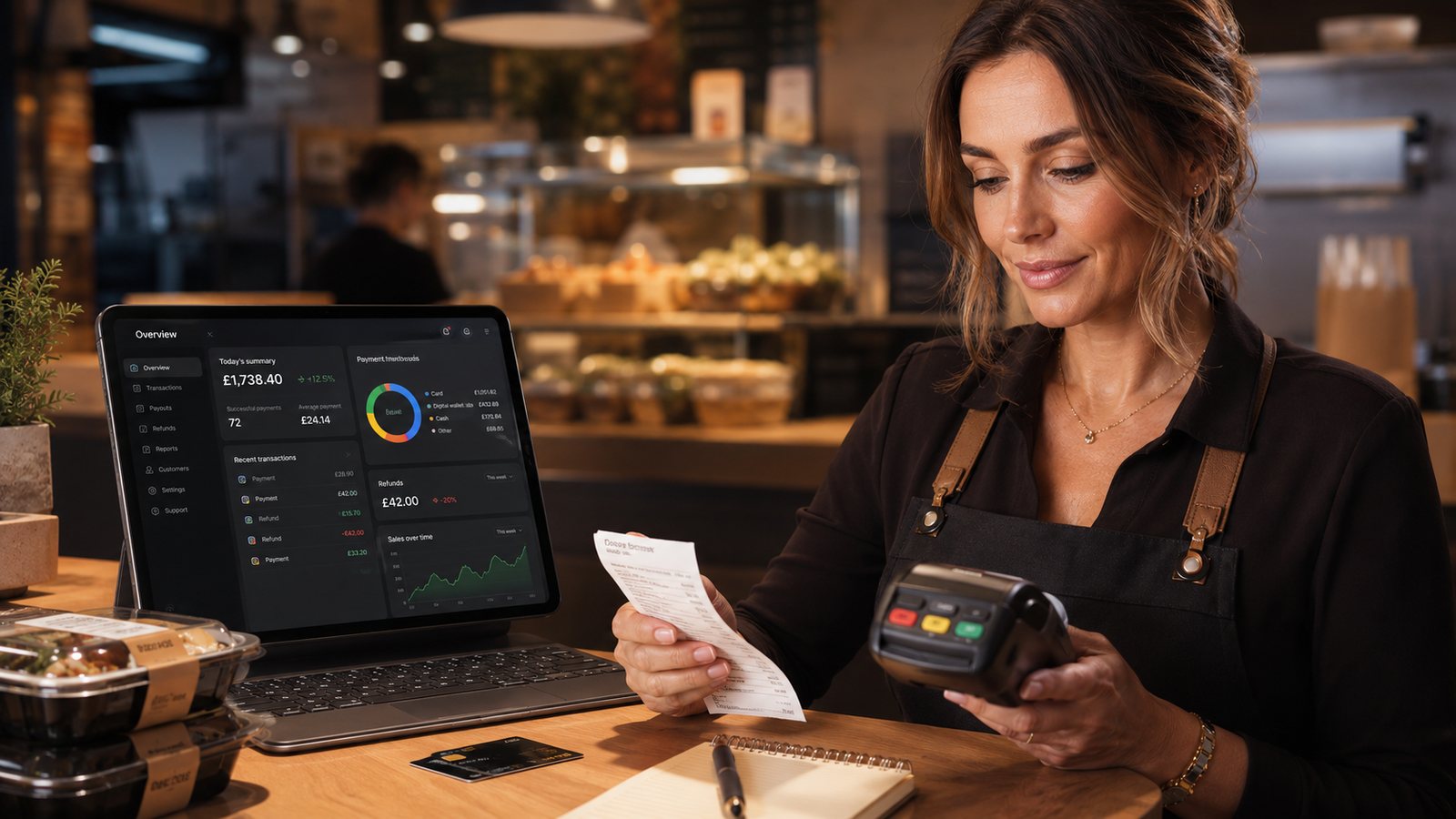
The best payment mix is the one customers can use easily and staff can reconcile accurately. Adding every available method can create more failure states, reports and support work without improving sales. Start with the order journeys and customers the takeaway actually serves.
Map methods by order channel
| Channel | Common practical options | Main control |
|---|---|---|
| Direct website or app | Cards, Apple Pay, Google Pay and other supported online methods | Reliable checkout, payment/order matching and refunds |
| Marketplace | Methods selected and processed by the platform | Understand payout and adjustment treatment |
| Collection | Online prepayment, card at counter, cash where accepted | Avoid duplicate collection and payment confusion |
| Own delivery | Online prepayment, cash or approved card-at-door process | Driver security, failed delivery and end-of-shift reconciliation |
| Telephone order | Payment link, pay on collection or provider-approved telephone payment | Never record full card details informally |
Cards
Debit and credit cards are the baseline for most online ordering systems. Verify:
- which card types and regions are accepted;
- the fee for each category;
- authentication and decline behaviour;
- refund and dispute handling;
- how the customer recognises the transaction on their statement.
Do not ask staff to collect card details through email, chat or handwritten notes. Use an approved checkout, terminal or payment-link process.
Apple Pay and Google Pay
Digital wallets can reduce typing on mobile because the customer uses a card already held in the device wallet. The benefit depends on:
- device and browser support;
- correct gateway configuration;
- clear display at checkout;
- the same order and refund reporting as card payments;
- testing after website or app updates.
Do not describe a wallet as a separate source of money if it ultimately uses a card through the same provider. Compare the actual fee and reporting treatment.
Pay-by-bank and other account-to-account methods
Some providers offer bank-based payment methods. Before adding one, check:
- whether customers in the target audience use it;
- how the customer returns to order confirmation;
- refund capability;
- payment status timing;
- support for mobile banking journeys;
- fraud and dispute handling;
- settlement and reconciliation references.
A lower quoted fee does not compensate for an unclear customer journey or manual refund process.
Cash
Cash can remain useful for some customers, but it changes risk and operations. Consider:
- change carried by drivers;
- staff and driver safety;
- fake orders and failed deliveries;
- cash limits;
- end-of-shift handover;
- recording discounts and tips;
- who can mark an order paid.
Do not let cash orders bypass capacity or order-accuracy controls. They should enter the same kitchen queue as prepaid orders.
Card at the door
A mobile terminal can reduce cash handling, but it requires:
- reliable connectivity;
- charged and assigned devices;
- a process when payment is declined at the address;
- clear terminal and order references;
- driver training;
- secure device return and storage;
- separate reconciliation of driver batches.
Do not prepare and dispatch a high-risk order on the assumption that payment at the door will always succeed.
Payment links
A provider-generated payment link can help with telephone orders, deposits or a controlled recovery after a failed checkout. The restaurant should verify the order amount before sending it and match the successful payment to one order reference.
Never send a second link until the first payment status has been checked. A customer who receives multiple links can pay twice.
Tips
If tipping is offered:
- make it clearly optional;
- do not preselect an amount without a valid and transparent choice;
- explain who receives it;
- record it separately from food and delivery revenue where required;
- confirm how refunds affect the tip;
- follow current employment and tax requirements.
Gift cards, credit and loyalty rewards
These methods introduce additional balances and liabilities. Define:
- expiry and terms;
- partial use;
- refund treatment;
- lost-account recovery;
- multi-location use;
- migration if the supplier changes;
- how unused balances are reported.
Do not launch stored value simply as a marketing feature without accounting and exit planning.
Choosing the initial payment mix
- Analyse current online, telephone, collection and delivery orders.
- Identify genuine customer barriers.
- Confirm what the existing gateway and ordering system support reliably.
- Calculate provider and operational costs.
- Test refunds, failures and reporting for each method.
- Launch a small set first.
- Add another method only when there is evidence of demand or operational benefit.
What to measure
- method selected by channel and device;
- authorisation and failure rate;
- checkout abandonment at payment;
- support incidents;
- refund time and manual work;
- fee per order;
- cash variance and failed cash deliveries;
- methods that are configured but rarely used.
Related guides
- Payments — the main guide for the wider topic.
- Payment Gateway Fundamentals — the broader guide that frames this implementation.
- Choosing a Payment Gateway for Online Orders — a closely related operational control to review alongside this page.
- Restaurant Payment-Gateway Fees — a closely related operational control to review alongside this page.
Official guidance checked
- Competition and Markets Authority: clear pricing and optional charges
- PCI Security Standards Council: payment security for merchants
Guidance checked: 24 July 2026. Method availability, fees and dispute procedures vary by provider and should be tested in the restaurant’s exact ordering setup.
Operational, legal and platform requirements can change. Recheck official guidance and supplier documentation before altering a live service.
Related practical guides
 PaymentsPCI DSS Compliance for RestaurantsPCI DSS is the payment-card industry security standard. It applies to organisations that store, process or transmit cardholder data, and it can a…Read guide →
 PaymentsMarketplace Payout IssuesA missing or reduced marketplace payout should be investigated as a reconciliation problem, not guessed from the bank balance. The difference may…Read guide →PaymentsHow to Set Up Digital ReceiptsA digital receipt should give the customer a reliable record without creating a new privacy problem or weakening the restaurant’s accounting trai…Read guide →PaymentsHow to Measure Marketplace CommissionThe headline commission percentage is not the same as the total cost of a marketplace order. To measure the channel properly, use order-level sta…Read guide →
 PaymentsHow to Calculate Contribution Margin by Ordering ChannelContribution margin shows what remains after the costs that change with, or are avoidable because of, an order. It is useful for channel and pric…Read guide →PaymentsHandling Refunds for Online OrdersA refund process should be fast enough to treat the customer fairly and controlled enough to prevent duplicates, fraud and accounting gaps. The r…Read guide →
Connect customer ordering with operations and profit
Use the wider guide library to check the menu, kitchen, fulfilment, payment and financial implications of each decision.
Browse all practical guides