Restaurant Payment-Gateway Fees
Payment-gateway cost is more than a percentage printed on a pricing page. The real cost depends on basket size, card mix, fixed charges, refunds, disputes, monthly fees, settlement options and any additional charge ap…
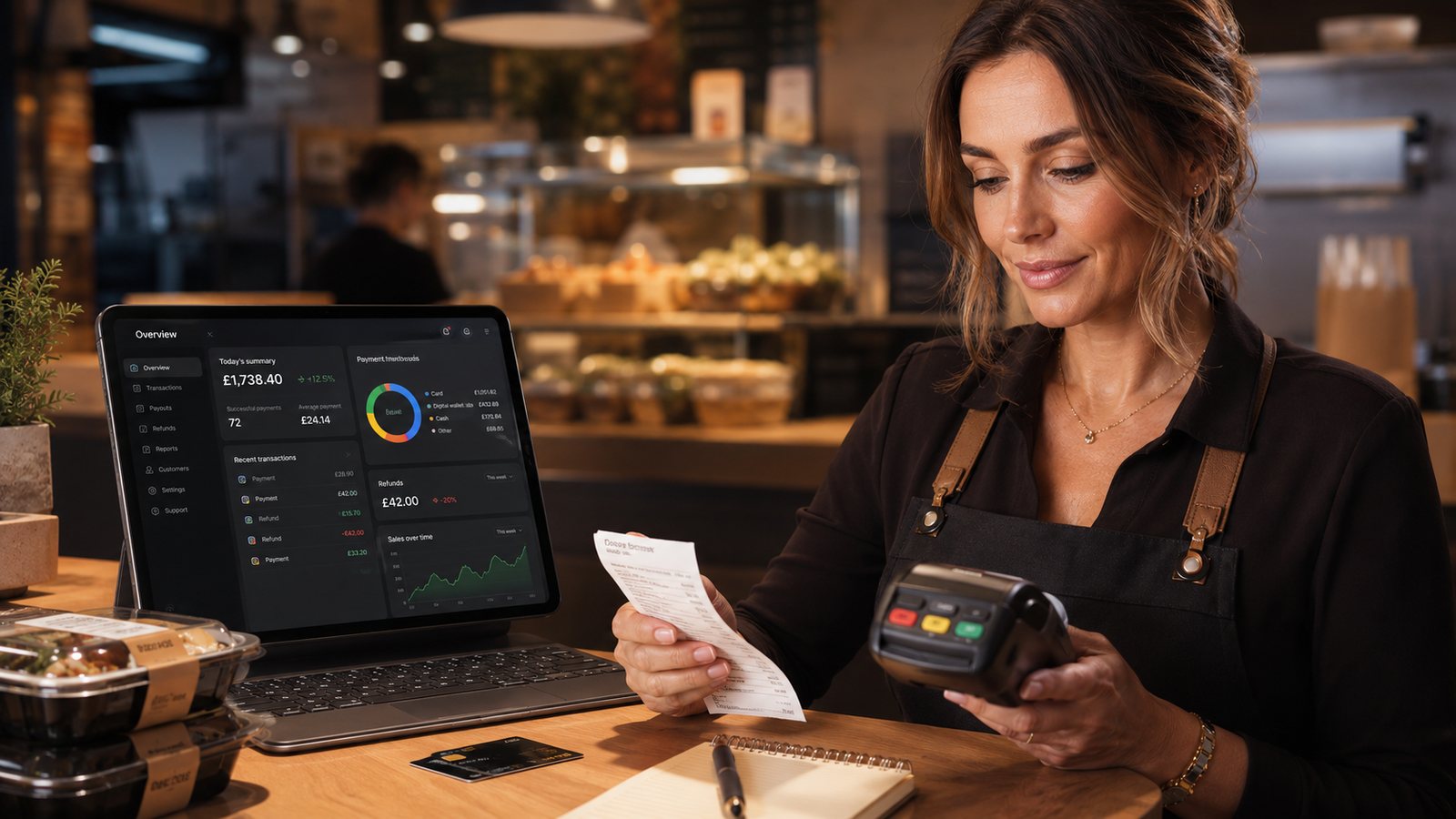
Payment-gateway cost is more than a percentage printed on a pricing page. The real cost depends on basket size, card mix, fixed charges, refunds, disputes, monthly fees, settlement options and any additional charge applied by the ordering platform. Calculate it from a written proposal and real order data.
Build a complete fee inventory
| Fee area | Question |
|---|---|
| Percentage charge | Which payment methods and card categories receive which rate? |
| Fixed transaction charge | Is a pence amount added to every successful transaction? |
| Monthly or minimum fee | Is there a platform, account, statement or minimum-use charge? |
| Ordering-system surcharge | Does the software supplier add a fee on top of the gateway? |
| Refund treatment | Is the original fee retained, returned or replaced by another charge? |
| Chargeback and dispute fees | What is charged when a dispute is opened or lost? |
| Settlement | Are faster payouts or instant transfers charged? |
| Reserve or hold | Can part of the balance be retained temporarily? |
| Terminal and hardware | What rental, purchase, SIM or replacement cost applies? |
| International or premium cards | Are different rates used? |
| Currency conversion | Does the restaurant accept any payment that creates exchange cost? |
| Support and integration | Are setup, development or enhanced support charged? |
Fixed fees affect small baskets
Where a provider charges both a percentage and a fixed amount, the fixed part represents a greater share of a small order. Model several basket bands rather than one average.
For an illustrative calculation only:
- Take the provider’s current percentage charge.
- Multiply it by the order value.
- Add the fixed transaction charge.
- Add any ordering-platform payment surcharge.
- Divide the total payment cost by the order value.
Replace the example figures with the written quotation. Do not publish a provider rate as a general market fact.
Compare payment methods separately
The provider may price:
- domestic consumer cards;
- commercial cards;
- cards issued outside the UK;
- digital wallets;
- pay-by-bank methods;
- card-present terminal transactions
differently. A blended headline rate can hide the actual mix. Use recent data or a realistic forecast.
Refund economics
For each provider, ask:
- Is the original processing fee returned after a full refund?
- How is a partial refund treated?
- Is there a separate refund fee?
- Can refunds create a negative balance?
- How long after the original transaction can staff submit one?
- Does the ordering platform add its own refund treatment?
The cost of the refund is separate from the cost of food, delivery and staff time already used.
Chargebacks and fraud-related cost
A chargeback can involve:
- the disputed transaction amount;
- a provider or acquirer fee;
- staff time collecting evidence;
- loss of food and delivery cost;
- additional monitoring or reserve conditions after repeated disputes.
Do not assume every complaint should be allowed to become a chargeback. A prompt, documented customer-service resolution may be operationally better, but it should be based on the facts and the restaurant’s legal obligations.
Settlement and cash-flow cost
A provider with a low transaction rate may settle more slowly or retain funds under certain risk conditions. Measure:
- days between transaction and deposit;
- weekend handling;
- value held in reserve;
- paid faster-settlement options;
- frequency of missing or adjusted payouts;
- administrative time needed to explain deposits.
Cash-flow impact should be shown separately from transaction cost rather than hidden inside an invented percentage.
Ordering-platform payment charges
Some software providers bundle gateway services; others allow a direct merchant account; some add a per-order or payment charge. Ask for a diagram showing:
- who contracts with the restaurant;
- who sets the payment price;
- who receives the funds first;
- who issues transaction and settlement reports;
- who can hold or restrict funds;
- what changes if the restaurant leaves the ordering platform.
A practical monthly calculation
- Export all successful direct transactions.
- Group them by payment method and relevant card category.
- Total provider transaction charges.
- Add monthly, platform and hardware costs.
- Add refund and dispute fees.
- Add paid settlement or other optional charges actually used.
- Record unrecovered losses separately.
- Divide the directly attributable payment cost by payment volume and by order count.
Keep provider charges separate from food, packaging, delivery and general overhead so the result remains understandable.
Compare providers fairly
Use the same:
- order values;
- payment-method mix;
- monthly volume;
- refund and dispute assumptions;
- settlement requirement;
- hardware requirement;
- integration scope.
Include contract term and likely migration work. A small fee saving may not justify an unreliable integration or loss of historical reporting.
Questions for the quotation
- Is every charge shown in writing?
- Does the rate include VAT where applicable?
- Can the provider change rates during the term?
- Are there minimum monthly charges?
- What happens to fees after a refund?
- What are the dispute charges?
- What reserve or hold rights exist?
- How long are reports available after termination?
- Does the ordering supplier add another payment fee?
Related guides
- Payments — the main guide for the wider topic.
- Payment Gateway Fundamentals — the broader guide that frames this implementation.
- Payment Methods for Takeaway Ordering — a closely related operational control to review alongside this page.
- Choosing a Payment Gateway for Online Orders — a closely related operational control to review alongside this page.
Official guidance checked
- Competition and Markets Authority: price transparency
- GOV.UK: payment obligations and disputed card payments
Guidance checked: 24 July 2026. All fees in this guide are categories to verify, not current rates. Use the provider’s written quotation, contract and statements.
Operational, legal and platform requirements can change. Recheck official guidance and supplier documentation before altering a live service.
Related practical guides
 PaymentsWhen to Refund vs When to RedeliverThe right remedy depends on what went wrong, whether the customer still needs the meal and whether the restaurant can complete a safe replacement…Read guide →
 PaymentsRecord Keeping for Tax and ComplianceA takeaway’s records must explain the business, not just show the money that reached the bank. Direct orders, marketplace settlements, cash, card…Read guide →
 PaymentsPricing Strategy for Online OrdersOnline pricing should cover channel and fulfilment cost, remain clear to customers and support a sustainable operating model. It should not rely …Read guide →PaymentsPayment Methods for Takeaway OrderingThe best payment mix is the one customers can use easily and staff can reconcile accurately. Adding every available method can create more failur…Read guide →PaymentsPCI DSS Compliance for RestaurantsPCI DSS is the payment-card industry security standard. It applies to organisations that store, process or transmit cardholder data, and it can a…Read guide →PaymentsMarketplace Payout IssuesA missing or reduced marketplace payout should be investigated as a reconciliation problem, not guessed from the bank balance. The difference may…Read guide →
Connect customer ordering with operations and profit
Use the wider guide library to check the menu, kitchen, fulfilment, payment and financial implications of each decision.
Browse all practical guides