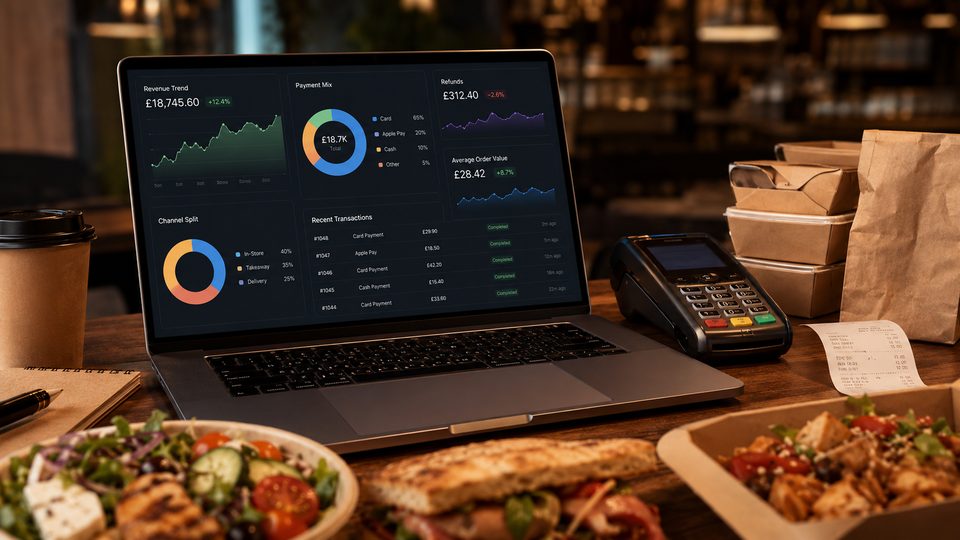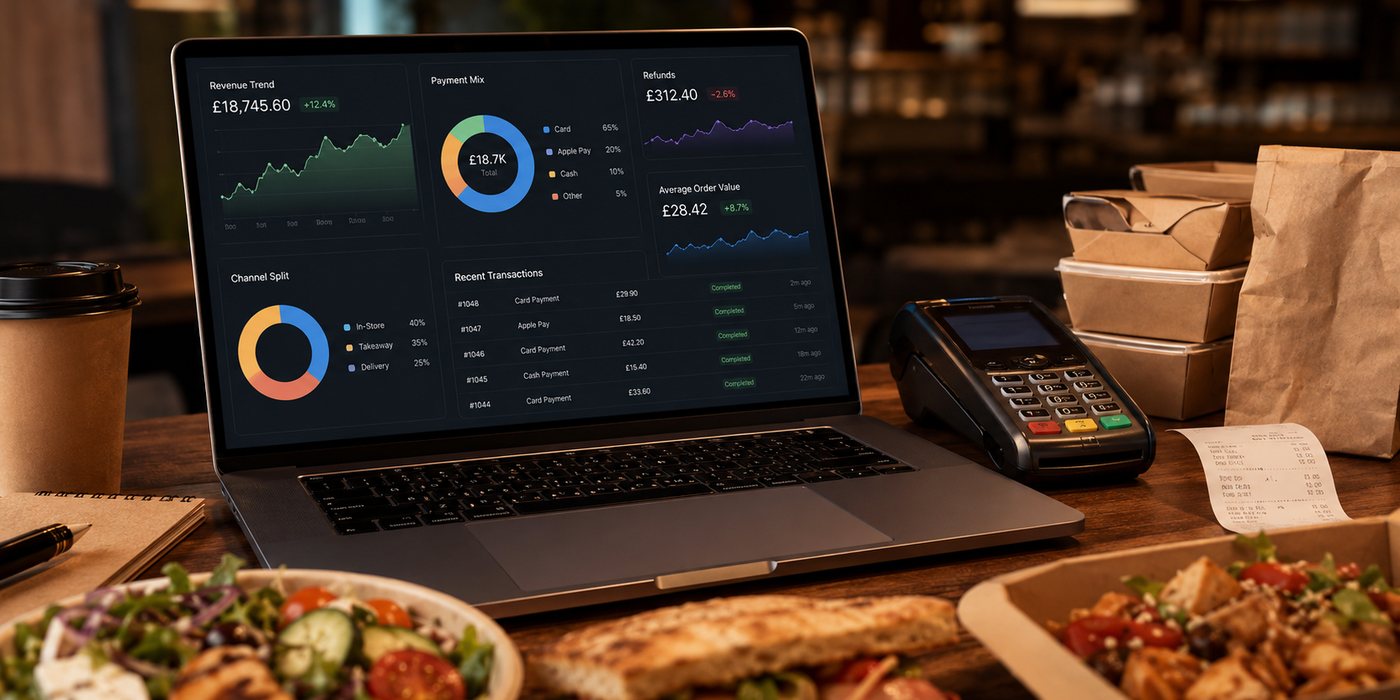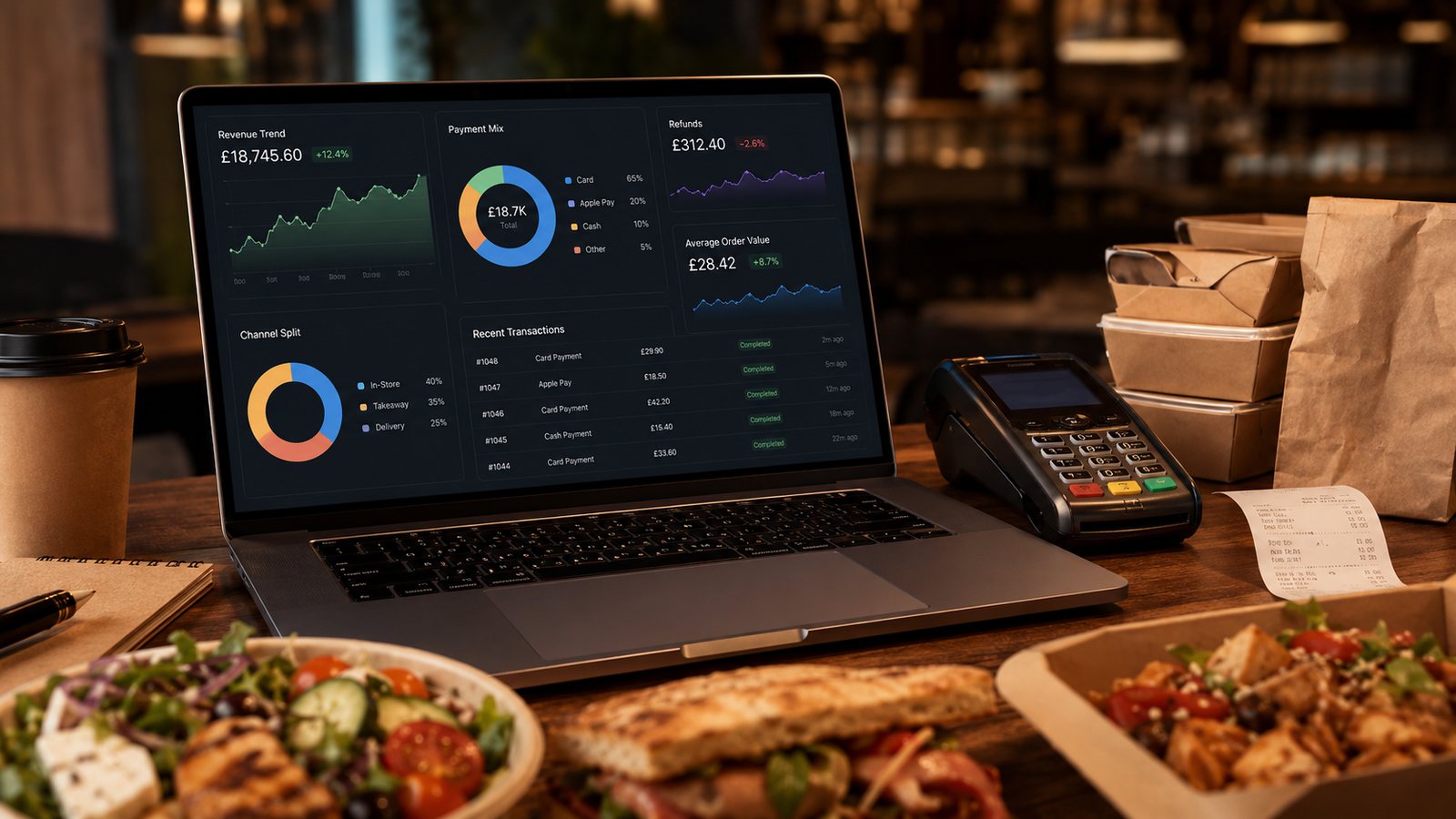
Online-ordering analytics should explain what happened from menu view to bank settlement and kitchen outcome. A large dashboard is not a substitute for consistent definitions, reliable identifiers and a process for investigating exceptions. The most useful data connects customer journey, order operation, payment, fulfilment and contribution.
Build the data model around the order lifecycle
| Stage | Core evidence | Operational question |
|---|---|---|
| Discovery and menu | Landing source, menu views, searches, availability | Could the customer find an orderable option? |
| Basket and checkout | Items, modifiers, fees, address, slot, abandonment | Where did the journey fail or become unclear? |
| Payment and acceptance | Transaction ID, status, duplicate protection, order ID | Was money and kitchen acceptance handled consistently? |
| Preparation and handover | Accepted, ready, collected and completed timestamps | Where did delay or error arise? |
| Aftercare | Refund, redelivery, complaint and repeat order | Was the outcome resolved and did the customer return? |
| Finance | Gross sale, commission, payment charge, settlement | What contribution and cash movement occurred? |
Define one metric dictionary
Document completed order, accepted order, cancelled order, new customer, repeat customer, promised time, ready time, refund and channel contribution. A marketplace “completed” status may not match the POS definition. Keep raw supplier status and the normalised reporting status.
Protect identifiers and history
Use stable order, item, customer and location IDs. Keep historical price, menu name and tax treatment on the order rather than rewriting the past when the live menu changes. Record integration source and version so a reporting shift can be traced to a system change.
Use analytics lawfully
Inventory cookies, SDKs and similar device technologies used for analytics. Explain what they do and obtain consent where required. Essential basket or security technologies may fall under a different rule from marketing or behavioural analytics. Respect a person's marketing objection when profiling supports direct marketing.
Report operations and economics together
- Completed legitimate orders by channel and fulfilment
- Acceptance, ready and handover times
- Unavailable-item and modifier failure
- Refund, complaint, redelivery and chargeback
- Contribution after channel and fulfilment costs
- Repeat behaviour by cohort
- Data-quality and unmatched-settlement exceptions
Investigate before optimising
A fall in conversion may be caused by closed delivery zones, stale availability, payment failure, consent-banner defects or a change in traffic quality. Segment the funnel by location, device, channel, fulfilment and time before redesigning checkout.
Govern supplier access and exports
Record controllers, processors, exports, retention, international access and contract exit. Test whether the business can retrieve raw order, payment, customer preference and event data without relying on screenshots.
Practical next step: select five headline metrics and trace each from source event to dashboard. If a figure cannot be reconciled to sample orders, remove it from decision reporting until repaired.
Use a data-quality scorecard
Track missing identifiers, duplicate events, impossible timestamp sequences, unmatched payments and stale menu mappings. Display freshness and last successful import on reports. A dashboard should fail visibly when data is incomplete rather than showing a plausible but outdated number.
Assign an owner for each critical feed and document how a supplier incident is escalated. Validate reports again after integration, timezone or status-mapping changes.
Related guides
- Online Ordering — the main guide for the wider topic.
- Cart Abandonment Recovery — a detailed next step for putting this guidance into practice.
- Conversion Rate Optimisation for Ordering — a detailed next step for putting this guidance into practice.
- Online Compliance and Food Safety — a closely related operational control to review alongside this page.
- Order Handling and Operations — a closely related operational control to review alongside this page.
- Measuring Marketing Performance — a connected decision that can change the recommended approach.
Sources and date checked
Guidance checked: 24 July 2026. Recheck official guidance and supplier documentation before changing a live system.