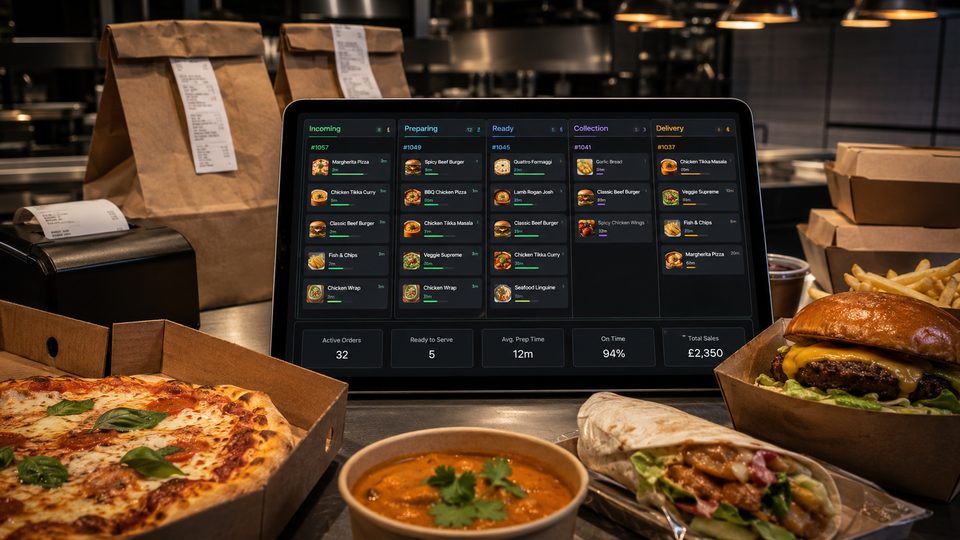
Reliability is the ability to keep accepting, preparing and reconciling orders when part of the technology chain fails. It depends on system design, staff procedures, supplier support and rehearsed fallback—not only on advertised uptime.
This hub separates the work into a downtime plan, resilient internet connectivity and backup and recovery for POS data.
Map critical services and dependencies
| Service | Dependencies | Fallback question |
|---|---|---|
| Order intake | Website, marketplace, phone, POS and integrations | Which channels can remain open safely? |
| Payment | Gateway, terminal, acquiring service and network | Can payment status be verified without guessing? |
| Kitchen output | KDS, printers, local controller and menu routing | How will accepted orders reach the kitchen? |
| Delivery | Driver system, maps, phone and customer contact | How will orders be assigned and confirmed? |
| Records | Cloud service, local database, exports and backups | How will service be reconciled and restored? |
Set operational priorities
- Prevent duplicate or unverified orders.
- Protect food safety and accurate fulfilment.
- Communicate realistic availability to customers.
- Keep a controlled record of every accepted order.
- Restore systems without losing or duplicating active work.
- Reconcile payment and order records after service.
Build layered resilience
- supported and maintained devices;
- secure local network;
- backup internet where justified;
- spare printer, terminal or controller for critical roles;
- protected power for routers and controllers;
- supplier escalation contacts;
- versioned configuration and data exports;
- paper forms and numbering for controlled fallback.
Define failure ownership
Write down who decides to pause a channel, switch to paper, restart equipment, contact the supplier, communicate with customers and reconcile records. Staff should not all reboot devices independently during an incident.
Choose the next guide
- Restaurant Ordering System Downtime Plan: diagnose, contain, communicate and recover during an incident.
- Internet Connectivity for Takeaway Operations: design primary and failover connections.
- Backup and Recovery for POS Data: identify protected data and prove restoration.
Test reliability, not just components
A successful router test does not prove that marketplace orders, terminals and KDS screens recover correctly. Run end-to-end scenarios:
- primary internet lost;
- one integration delayed;
- KDS unavailable but POS working;
- printer offline;
- payment outcome unknown;
- cloud service unavailable;
- device replaced from backup;
- systems return with queued orders.
Review every incident
Record start time, affected channels, customer impact, decisions, supplier response, manual orders, recovery steps and reconciliation differences. Fix the underlying weakness rather than only replacing the failed device.
Supplier service levels
Confirm support hours, priority definitions, target response, escalation, status communication, replacement process and ownership across connected suppliers. An uptime percentage is incomplete without knowing what is measured and what remedy exists when the service fails.
Maintenance controls
- supported software and operating-system versions;
- planned update windows;
- router, controller and device firmware;
- spare hardware readiness;
- mobile failover data allowance;
- backup and restore tests;
- staff refresher exercises;
- supplier and credential changes.
Risk-based investment
Prioritise the failures that stop order acceptance, payment verification or safe kitchen output. A small business does not need duplicate versions of every device, but it should not depend on one unsupported router, one untested printer or one person who knows the recovery process.
Practical next step: run a thirty-minute tabletop exercise using the scenario “internet fails during the Friday peak”. If roles, channel decisions and order records are unclear, the fallback is not ready.
Related guides
- POS and Kitchen Systems — the main guide for the wider topic.
- Backup and Recovery for POS Data — a detailed next step for putting this guidance into practice.
- Internet Connectivity for Takeaway Operations — a detailed next step for putting this guidance into practice.
- Receipt Printers and Hardware — a closely related operational control to review alongside this page.
- Kitchen Display Systems — a closely related operational control to review alongside this page.
- Restaurant Ordering System Downtime Plan — a connected decision that can change the recommended approach.