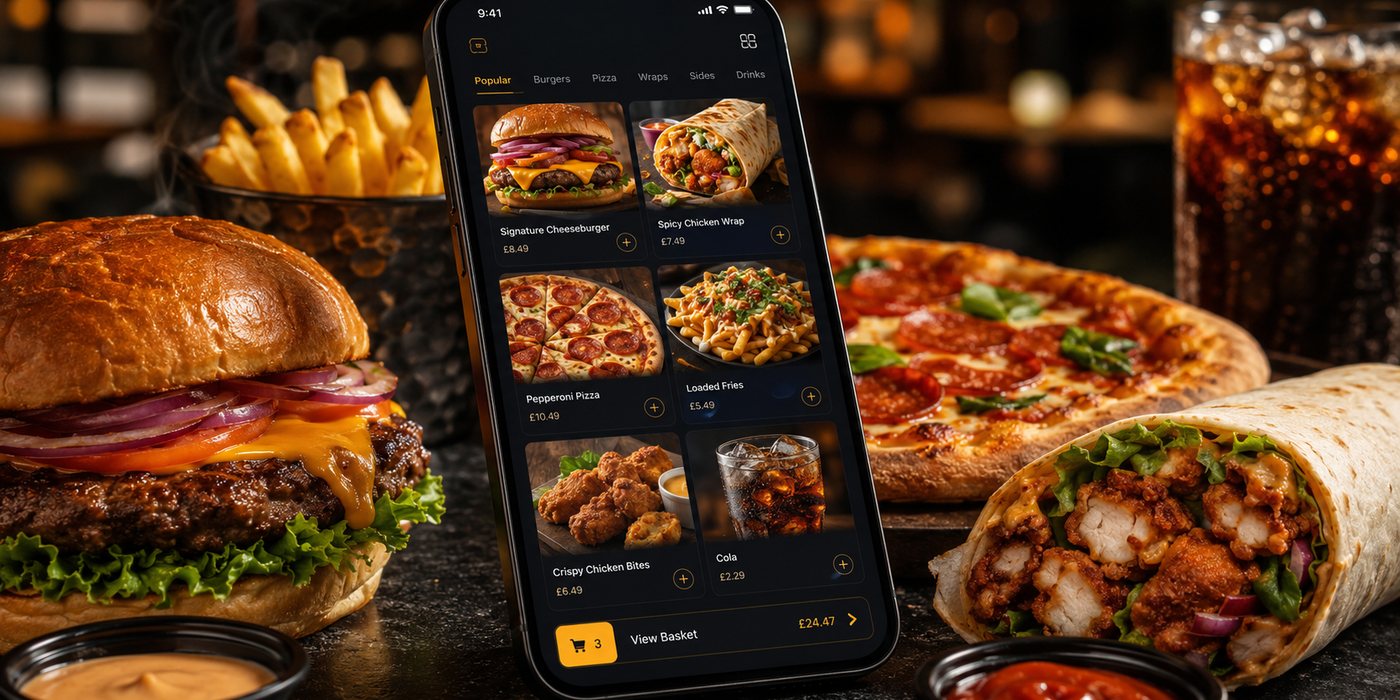
Direct Ordering vs Marketplaces
Direct ordering and delivery marketplaces are not interchangeable versions of the same service. A marketplace can provide demand and convenience. A direct channel can provide greater control over the customer journey…
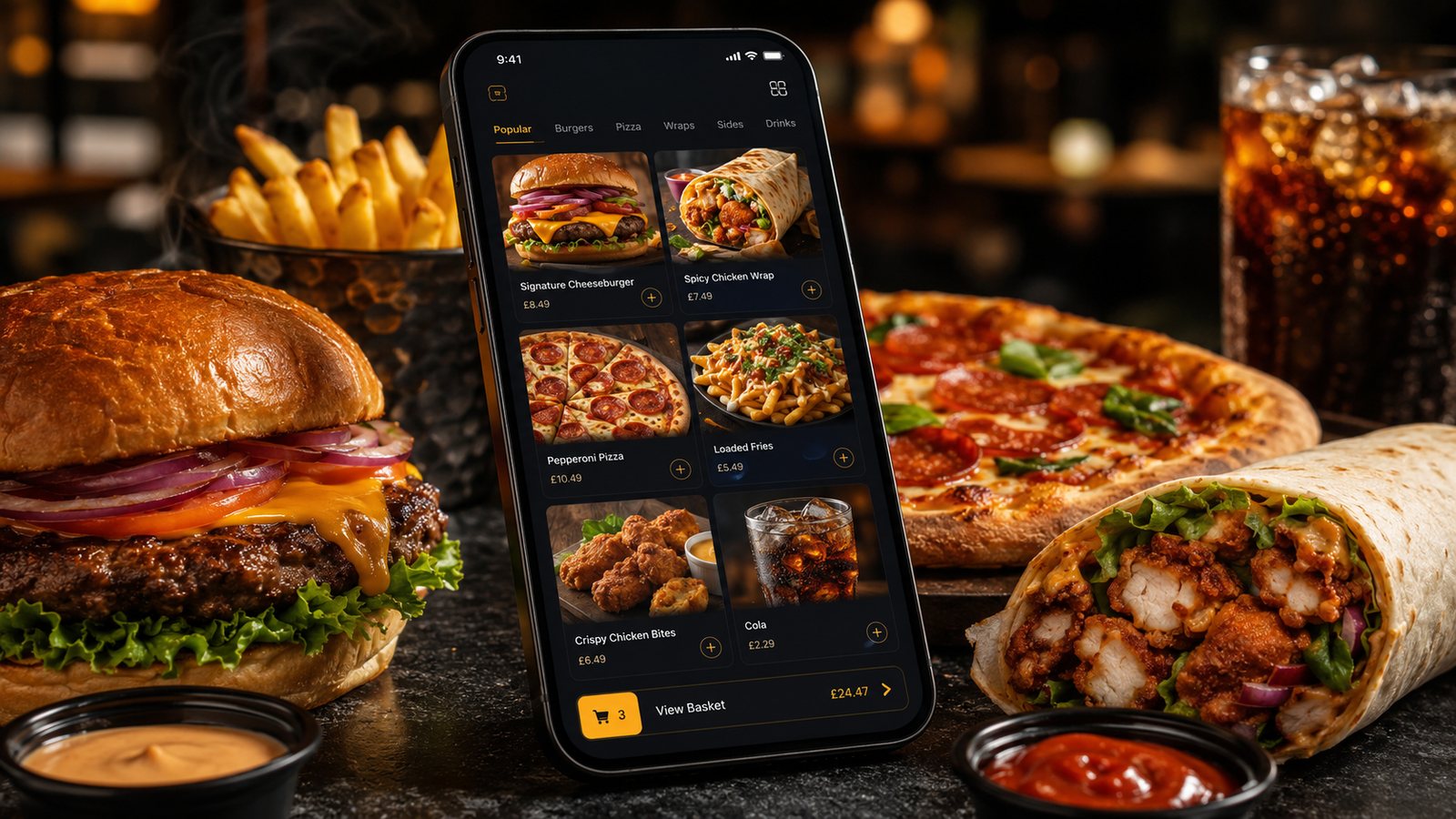
Direct ordering and delivery marketplaces are not interchangeable versions of the same service. A marketplace can provide demand and convenience. A direct channel can provide greater control over the customer journey and commercial model. The sensible choice depends on how customers find the takeaway, how orders reach the kitchen and whether the business can operate and promote its own channel consistently.
The decision is not simply commission versus no commission
Direct ordering still has costs. These may include software, payment processing, integrations, support, delivery, marketing and staff time. Marketplace ordering may include commission and other contracted charges, but it can also provide customer discovery, payment handling, support processes and access to delivery services.
Compare contribution by channel rather than headline fees. For each channel, start with order revenue and subtract the costs that change because that order came through that channel. Depending on the operation, these may include:
- platform or order-related charges;
- payment costs;
- discount funding;
- delivery cost;
- packaging differences;
- refunds, remakes and failed delivery;
- incremental marketing cost;
- manual administration or reconciliation.
Use the business's own statements and contracts. Do not copy a generic commission figure into the calculation.
Side-by-side comparison
| Decision area | Direct ordering | Marketplace |
|---|---|---|
| Customer discovery | The takeaway must generate traffic through its brand, local search, packaging, social channels and existing customers | The platform may expose the business to customers already searching within the marketplace |
| Customer journey | Greater control over menu presentation, checkout, messaging and brand | Experience is largely defined by the platform |
| Commercial model | Software, payment, delivery, support and marketing costs must be combined | Charges depend on the provider, contract, services and promotions used |
| Customer information | The business may collect information needed for fulfilment and, where permitted, operate its own marketing preferences | Access and permitted use depend on the platform's contract, privacy roles and order flow |
| Kitchen operation | Can be designed around the existing POS and kitchen, but only if integration is reliable | May arrive through a tablet, printer or integration with platform-specific processes |
| Delivery | The takeaway must operate drivers or connect a suitable delivery service | The platform may offer delivery, subject to its service model and local availability |
| Marketing | The business owns the workload and can shape the message | Visibility can depend on platform placement, availability, performance and paid participation |
| Exit and portability | Depends on ownership of the domain, ordering account, data, integrations and app assets | The marketplace customer relationship normally remains within the platform environment |
When a marketplace is especially useful
A marketplace may be valuable when the takeaway:
- is new and has limited local awareness;
- needs access to customers who already order through an established app;
- cannot yet operate its own delivery fleet;
- wants to test demand in a new location or delivery area;
- does not yet have the time or skills to promote a direct channel;
- can absorb the commercial terms without damaging service or contribution.
The value should be measured by incremental demand, not total marketplace sales. Some customers may have ordered directly if the marketplace had not been available. Others may be genuinely new. The business rarely knows the exact split, so avoid assuming that every marketplace order is additional revenue.
When direct ordering is especially useful
A direct channel is more likely to justify itself when the takeaway:
- has a recognisable local brand and regular customer base;
- receives branded searches, telephone orders or repeat collection business;
- can keep its menu, prices and availability accurate;
- has a reliable payment and kitchen workflow;
- can promote the channel consistently without misleading customers;
- has a clear privacy and marketing-permission process;
- can support customers when an order or payment fails.
Direct ordering does not succeed merely because a website exists. Customers need a reason to trust it and a convenient way to return. The process must work well on a phone, display realistic times and make collection or delivery terms clear before payment.
Why a hybrid model is often practical
For many independent takeaways, the strongest approach is not an immediate switch. Marketplaces remain a discovery channel while direct ordering becomes the preferred route for customers who already know the business.
A hybrid model should be designed deliberately. Otherwise, it creates several uncontrolled queues, inconsistent menus and a reconciliation problem.
Set rules for:
- which menu and prices apply to each channel;
- where availability is updated;
- how preparation time is adjusted during a peak;
- which channel is paused first when the kitchen is full;
- how delivery capacity is allocated;
- how refunds and complaints are recorded;
- how channel profitability is reviewed.
Do not use customer data casually
A direct order may give the takeaway access to contact and delivery information required to fulfil the order. It does not automatically create permission for every form of future marketing. The business should explain its use of personal information clearly and apply the relevant rules to email, SMS and push notifications.
Marketplace data access and marketing permissions vary. Check the current contract and provider documentation rather than assuming that the restaurant is entitled to export or reuse customer details.
A controlled way to strengthen direct ordering
- Measure the current mix. Record orders, sales, variable channel costs, refunds and fulfilment performance.
- Fix the direct journey. Test mobile ordering, menu accuracy, payment, delivery areas, status messages and support.
- Start with existing customers. Make the direct route easy to find on the website, in the premises and on permitted owned communications.
- Avoid an uncontrolled surge. Set slot limits and pause controls before promoting the channel.
- Review service as well as margin. A cheaper order is not better if it is late, inaccurate or difficult to reconcile.
- Adjust channel roles. Keep marketplace coverage where it brings useful incremental demand and strengthen direct ordering where the business can serve customers well.
Do not interfere with a marketplace's rules, obscure required information or make misleading claims about prices and savings. The objective is to build a useful direct relationship, not to create conflict at the point of sale.
Questions to answer before changing the channel mix
- How many customers already search for the takeaway by name?
- Which orders appear genuinely incremental?
- What is the contribution per order after channel-specific costs?
- Can the kitchen see all orders in one controlled queue?
- Can the business update menus and sold-out items across every channel?
- Who handles direct-order support, refunds and failed payments?
- Is delivery capacity sufficient without the marketplace fleet?
- What customer information is available, and what uses are permitted?
- What happens if the direct supplier or integration fails?
The right channel strategy is the one that balances reach, contribution, customer convenience and operational control. It should be reviewed as the business, contracts and customer behaviour change.
Related guides
- Online Ordering — the main guide for the wider topic.
- Owned Channels vs Marketplaces — the broader guide that frames this implementation.
- Own Ordering App vs Delivery Marketplace — a closely related operational control to review alongside this page.
- How to Reduce Dependence on Delivery Marketplaces — a closely related operational control to review alongside this page.
Official guidance checked
- Information Commissioner's Office: How to write a privacy notice
- Information Commissioner's Office: Electronic mail marketing rules
Guidance checked: 24 July 2026. Marketplace services, data access and commercial terms differ by provider and contract and should be verified directly.
Operational, legal and platform requirements can change. Recheck official guidance and supplier documentation before altering a live service.
Related practical guides
 Online OrderingHow to Design Checkout for TakeawayA takeaway checkout should confirm a clear order, a realistic fulfilment promise and a transparent total price with as little unnecessary effort …Read guide →
 Online OrderingFood Hygiene Ratings and Online OrderingA hygiene rating is an official snapshot of standards found at an inspection. Displaying it accurately can build trust, but the rating should not…Read guide →
 Online OrderingConversion Rate Optimisation for OrderingConversion-rate optimisation for takeaway ordering should remove avoidable confusion and failure, not pressure customers into unsuitable orders. …Read guide →
 Online OrderingCollection and Click-and-Collect SetupClick-and-collect removes driver and delivery-zone complexity, but it does not remove the need for capacity control. A poor setup moves the queue…Read guide →
 Online OrderingHow to Reduce Dependence on Delivery MarketplacesReducing marketplace dependence should not mean switching off a channel that still brings useful demand. The safer objective is to build a direct…Read guide →Online OrderingHow to Handle Busy PeriodsA busy period becomes damaging when orders enter faster than the kitchen, packing area or delivery operation can complete them. The solution is n…Read guide →
Connect customer ordering with operations and profit
Use the wider guide library to check the menu, kitchen, fulfilment, payment and financial implications of each decision.
Browse all practical guides