How to Handle Allergens Online
A safe online allergen process connects approved recipes, supplier specifications, menu data, trained staff, kitchen controls and delivery-stage information. A disclaimer, filter or free-text note cannot replace that…
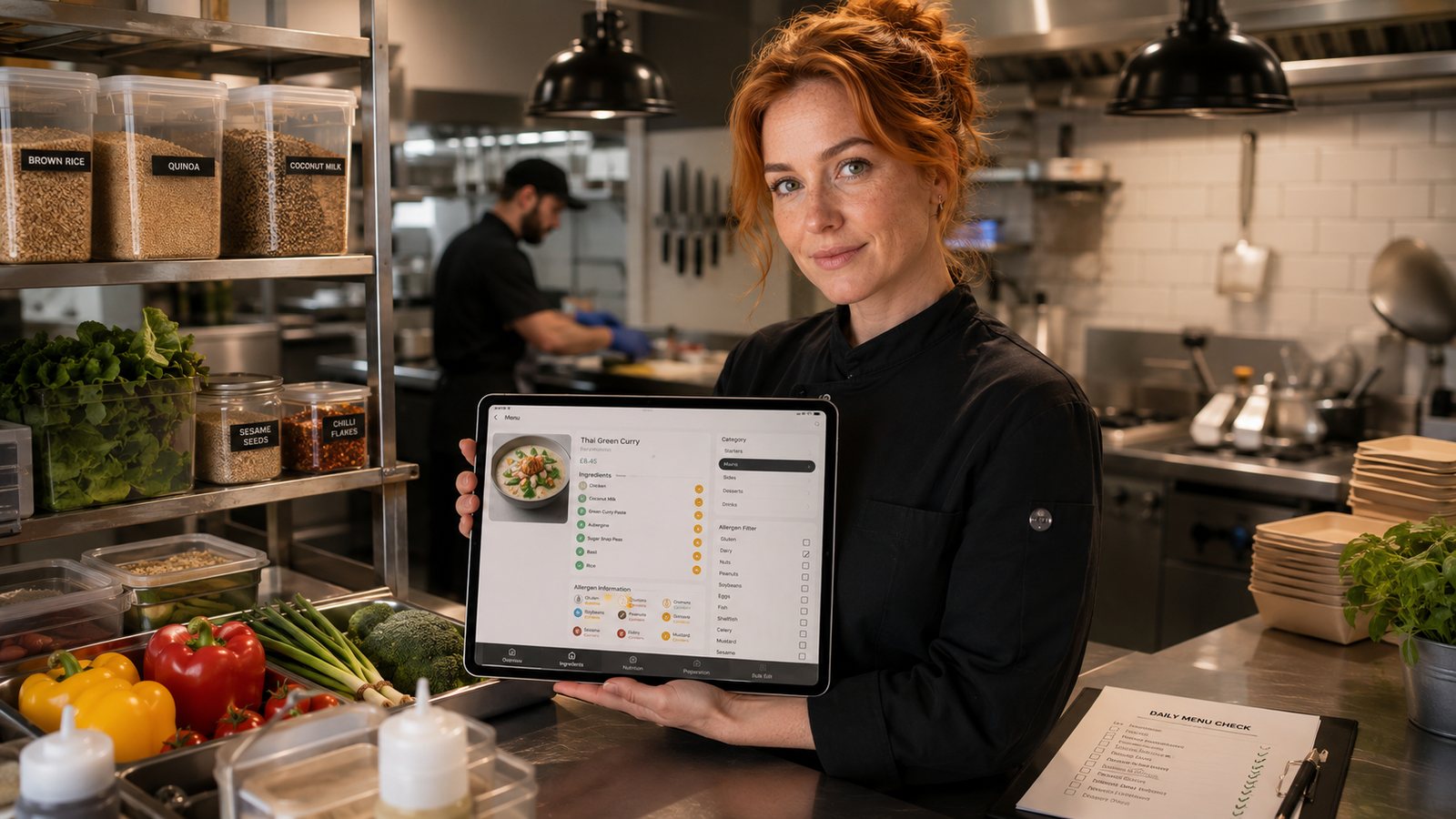
A safe online allergen process connects approved recipes, supplier specifications, menu data, trained staff, kitchen controls and delivery-stage information. A disclaimer, filter or free-text note cannot replace that system.
Related guides
- Online Ordering — the main guide for the wider topic.
- Online Compliance and Food Safety — the broader guide that frames this implementation.
- Food Hygiene Ratings and Online Ordering — a closely related operational control to review alongside this page.
- Dietary Requirements on Digital Menus — a closely related operational control to review alongside this page.
Create one approved allergen source
Build the allergen matrix from current ingredients and supplier specifications, not memory. Include sauces, oils, garnishes, drinks, sides and every modifier. Name the approver and version. If information is incomplete, stop the affected item or remove the online claim until it is resolved.
Make information available before purchase
For non-prepacked food sold online or by phone, written allergen information should be available before the customer completes the order. Put it close to the item and modifier choices. A generic statement asking customers to call may support the process, but it should not hide ingredient-level information that the business can provide in writing.
Provide information at delivery
The order needs a reliable delivery-stage method, such as a label, receipt, printed reference or another process that reaches the correct customer with the correct order. Test multi-bag orders, split orders and marketplace handover. Do not assume that information visible in an app remains available after checkout.
Design the order workflow
| Stage | Control |
|---|---|
| Menu selection | Item and modifier allergens visible and accessible |
| Customer query | Trained staff use the approved source; uncertainty is escalated |
| Checkout | Important requests are confirmed without promising impossible separation |
| Kitchen | Clear ticket, recipe and cross-contact procedure |
| Packing | Correct order identity and delivery-stage information |
| Incident | Immediate safety escalation, evidence preservation and corrective review |
Control modifiers and substitutions
- Make default sauces and toppings explicit.
- Calculate the allergen impact of every option.
- Prevent an unavailable ingredient from being silently replaced.
- Remove items promptly when supplier data is uncertain.
- Retest website, app, marketplace and kitchen outputs after changes.
- Do not let staff “edit around” an allergy request through an unapproved note.
Use careful language
Avoid “allergen free”, “safe for everyone” or “prepared separately” unless the business can substantiate the complete claim. Explain cross-contact risk accurately and do not use a disclaimer to contradict a strong badge. Dietary labels such as vegan or gluten-free need their own approved standards and do not replace regulated allergen information.
Train and rehearse
Train ordering, kitchen, packing, driver and support staff on the same process. Use realistic test orders involving modifiers, phone queries, marketplace orders and supplier substitutions. Record competence and retrain after a system or recipe change.
Practical next step
Run an end-to-end test with one complex item: customer view, modifier selection, checkout, kitchen ticket, packing label and delivery handover. Record every place where the approved allergen information changes or disappears.
Audit marketplaces and telephone orders separately
A marketplace may restrict the way allergen data is displayed, while telephone orders depend more heavily on trained staff. Record the exact capability and limitation of each channel. Where a platform cannot show the approved information clearly, use an authorised workaround or remove the affected product rather than relying on a vague disclaimer.
Telephone staff should read from the approved source, repeat the item and modifiers, record the request accurately and know when not to accept an order. Never improvise from memory or promise that removing one ingredient removes all cross-contact risk.
Review incidents and near misses
Track incorrect menu information, staff uncertainty, missing delivery labels, supplier substitutions and orders stopped before fulfilment. Near misses are evidence of a weak control even where no customer reports harm. Assign a corrective owner and verify the fix across every channel.
Sources and date checked
Guidance checked: 24 July 2026. Recheck official guidance, local requirements and supplier documentation before changing a live operation.
Operational, legal and platform requirements can change. Recheck official guidance and supplier documentation before altering a live service.
Related practical guides
 Online OrderingMarketplace Visibility and RankingMarketplace visibility can affect order volume, but restaurants rarely know the full logic behind search, recommendation and sponsored placement.…Read guide →
 Online OrderingMarketplace Menu ManagementA marketplace menu is a live operating document. It controls what customers can buy, what the kitchen receives and what the business may later ne…Read guide →
 Online OrderingMarketplace Commission StructuresMarketplace cost is rarely one simple percentage. The total depends on the provider, contract, delivery model, promotions, payment treatment, ref…Read guide →Online OrderingHow to Design Checkout for TakeawayA takeaway checkout should confirm a clear order, a realistic fulfilment promise and a transparent total price with as little unnecessary effort …Read guide →
 Online OrderingFood Hygiene Ratings and Online OrderingA hygiene rating is an official snapshot of standards found at an inspection. Displaying it accurately can build trust, but the rating should not…Read guide →
 Online OrderingConversion Rate Optimisation for OrderingConversion-rate optimisation for takeaway ordering should remove avoidable confusion and failure, not pressure customers into unsuitable orders. …Read guide →
Connect customer ordering with operations and profit
Use the wider guide library to check the menu, kitchen, fulfilment, payment and financial implications of each decision.
Browse all practical guides