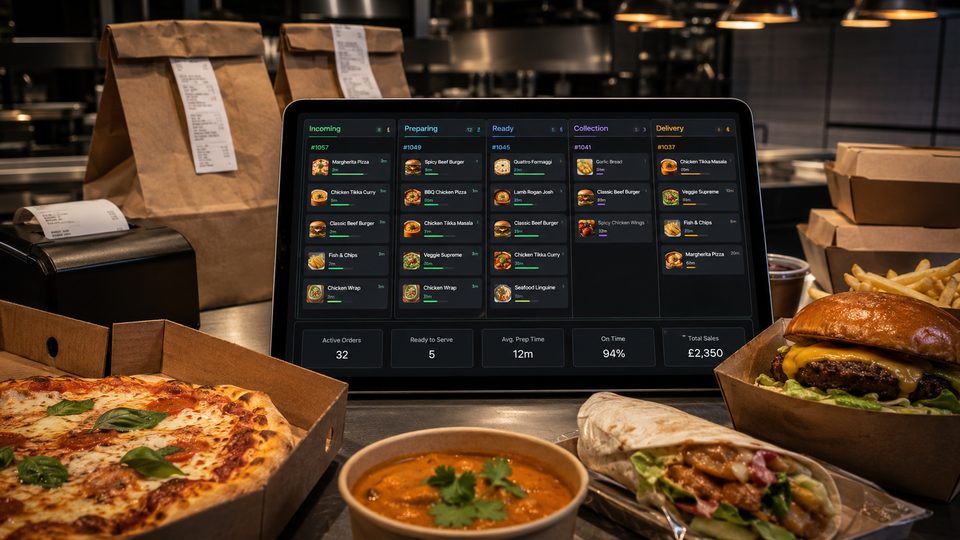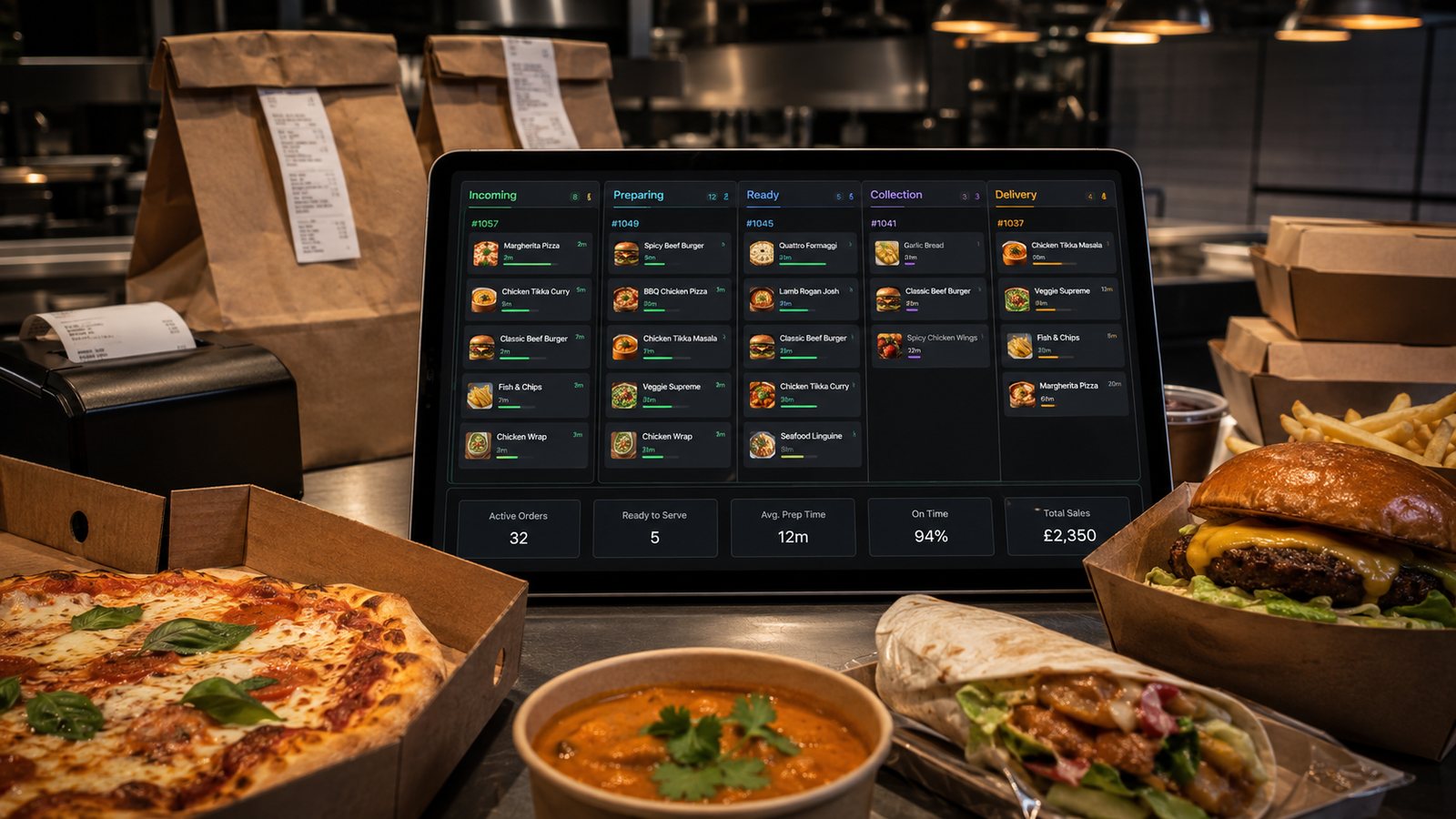
Operational efficiency means creating reliable output with less avoidable work, not forcing staff to move faster. Improve the menu, preparation, timing, staffing and information flow before buying automation.
Find the real constraint
Measure the order journey by stage: intake, acceptance, preparation start, bottleneck station, assembly, packing and handover. The slowest visible step is not always the constraint. Orders may wait because ingredients are unavailable, modifiers are unclear, drivers arrive too early, payment is uncertain or one employee controls too many decisions.
| Problem | Likely control | Related guide |
|---|---|---|
| Menu creates excessive variation | Simplify online combinations and validate modifiers | Reducing Kitchen Load from Online Orders |
| Displayed times are unreliable | Build preparation profiles and capacity states | Order Timing and Prep Management |
| Digital demand is invisible to staffing | Forecast workload by stage and fulfilment | Staffing for Digital Orders |
| Sources compete for attention | Use one intake and production model | Cross-Channel Operations |
| Completed food waits at the pass | Improve packing and handover coordination | Kitchen Workflow for Multi-Channel Orders |
Remove avoidable work first
- Retire duplicate menu records and repeated manual entry.
- Fix unclear product names and modifier combinations.
- Stop printing outputs that nobody uses.
- Assign ownership for sold-out and timing changes.
- Put frequently used packaging and equipment at the point of work.
- Replace recurring verbal workarounds with controlled configuration or a documented procedure.
Prepare according to evidence
Use recent demand by item, station, daypart and fulfilment type. Prepare components that can be held safely and used flexibly. Set lower and upper preparation ranges rather than one confident forecast. Record waste and shortages. A preparation plan that reduces cooking time but creates waste, food-safety risk or inflexible stock is not efficient.
Batch compatible work
Batching can reduce repeated setup, but only when orders have compatible readiness and promise windows. Do not hold an early completed order merely to make a route or cooking batch look efficient. Define maximum grouping rules and let the expeditor break the batch when quality or customer commitment is at risk.
Balance automation and human control
Automation is useful for repetitive, well-defined work: importing orders, updating availability, routing standard items and producing reports. Keep human review for ambiguous substitutions, allergen requests, payment uncertainty, suspected fraud and unusual recovery. Every automation needs an owner, alert, manual override and tested off switch.
Measure outcomes with guardrails
| Measure | Guardrail |
|---|---|
| Orders completed per labour hour | Accuracy, complaints and fatigue |
| Average preparation time | Promise accuracy and food wait |
| Reduced manual entry | Integration exceptions and duplicate orders |
| Lower packaging time | Missing items, leaks and temperature quality |
| Higher channel volume | Contribution and kitchen capacity |
Run controlled improvements
Change one defined part of the workflow, document the expected effect, train the affected staff and measure a representative period. Preserve the previous configuration so it can be restored. Review both intended and unintended outcomes. A successful change should become the new documented standard rather than remaining the technique of one shift.
Improve handoffs and workspace design
Efficiency is often lost between roles rather than inside a task. Define where an order changes ownership, what information must travel with it and how the next person confirms receipt. Place screens, printers, labels, bags and completed orders according to the physical sequence of work. Observe unnecessary walking, reaching, searching and repeated verbal confirmation. Small layout changes can remove recurring effort without increasing pace or reducing checks.
Related guides
- Cross-Channel Operations — the main guide for the wider topic.
- Order Timing and Prep Management — a detailed next step for putting this guidance into practice.
- Reducing Kitchen Load from Online Orders — a detailed next step for putting this guidance into practice.
- Multi-Channel Order Management — a closely related operational control to review alongside this page.
- Channel-Specific Operations — a closely related operational control to review alongside this page.