Staffing for Digital Orders
Digital demand creates an invisible queue and new control work. Staff the workload at intake, kitchen, packing, handover, support and reconciliation rather than adding one vague “online orders” responsibility to the c…
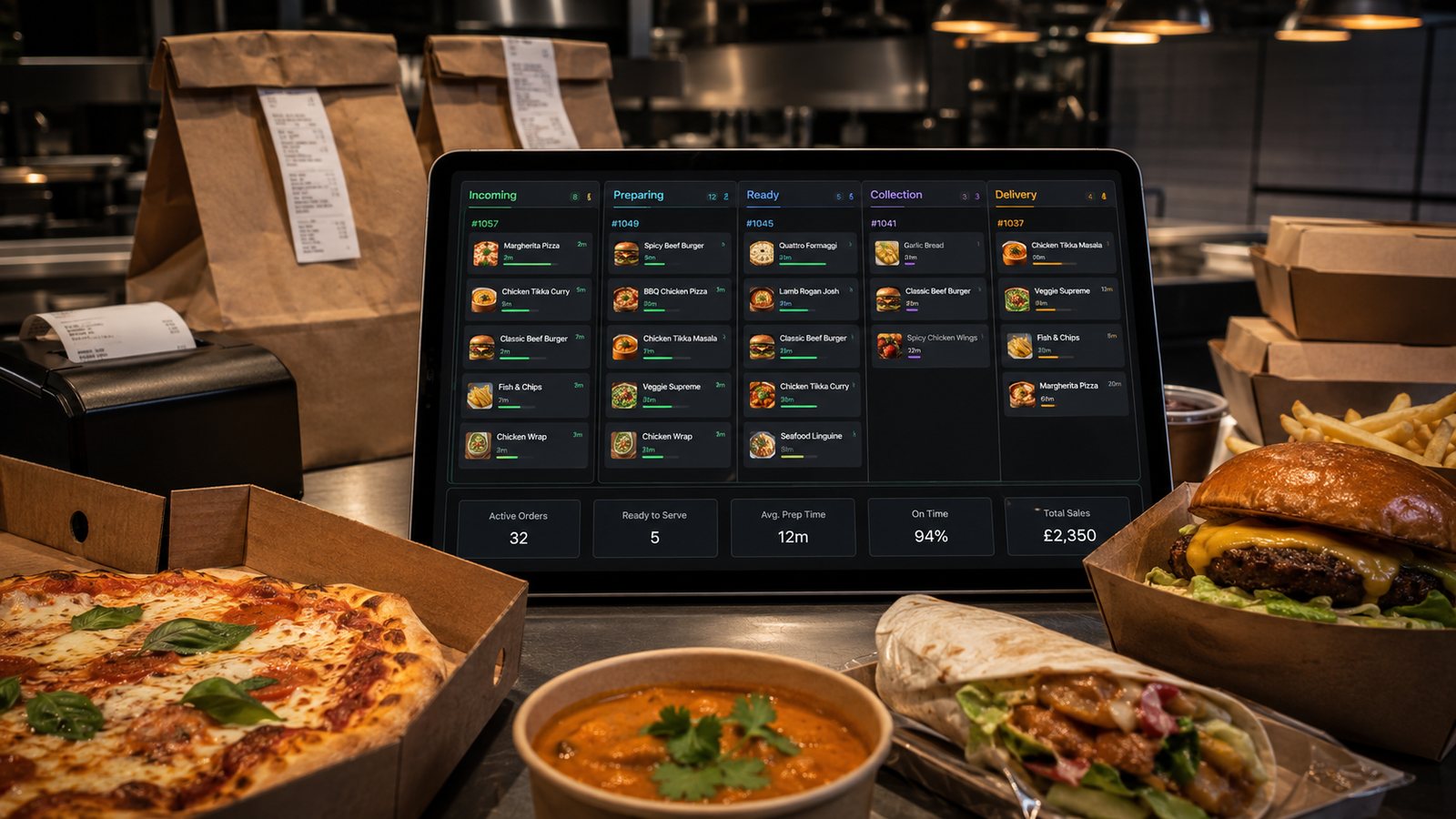
Digital demand creates an invisible queue and new control work. Staff the workload at intake, kitchen, packing, handover, support and reconciliation rather than adding one vague “online orders” responsibility to the counter.
Map work by stage and time
Use order history to estimate workload by source, fulfilment type, item profile and daypart. Include acceptance, exception handling, cooking, packing, driver liaison, collection handover, refunds and settlement checks. The number of orders alone is not enough: ten simple collections may require less work than four complex delivered baskets.
Define the critical roles
| Role | Core responsibility | Typical failure if unowned |
|---|---|---|
| Order controller | Monitor intake, capacity and exceptions | Missed or late orders |
| Expeditor | Coordinate stations and complete orders | Components finish without a complete basket |
| Packer | Check, label and prepare handover | Missing items, leaks and wrong bags |
| Driver liaison | Manage assignment, waiting and failed handover | Food waits or duplicate dispatch occurs |
| Collection host | Verify and hand over completed orders | Counter congestion and privacy mistakes |
| Shift lead | Apply capacity controls and recovery | Every channel continues accepting demand |
Small teams can combine roles, but the combinations should change by service state. One person should not be expected to answer the phone, accept marketplace orders, pack deliveries and resolve payments at the same moment during a peak.
Build rotas from workload bands
Plan normal, busy and exceptional staffing using demand ranges. Include preparation before opening and reconciliation after service. Identify the bottleneck skill, not only total headcount. An extra person without access, training or station competence may add little capacity.
Train for digital-first accuracy
- Common order and payment statuses.
- Menu, modifiers and allergen escalation.
- Capacity controls and who may pause a channel.
- Printer, KDS and integration failure.
- Customer communication and privacy.
- Refund, complaint and suspected-fraud escalation.
- Manual fallback and post-recovery reconciliation.
Control permissions
Give staff the access needed for their role, not shared administrator accounts. Separate routine refund authority from larger or unusual adjustments. Record changes to menu, price, availability and promotions. Remove access promptly when roles change or people leave.
Manage fatigue and pressure
Unrealistic promise times and performance targets can encourage unsafe shortcuts, missed allergen checks and poor driving decisions. Plan breaks and role rotation. Use staff feedback and near-miss reports as operational evidence. A higher order count is not a success if error, aggression, fatigue or injury risk rises.
Prepare for absence and failure
Cross-train at least one backup for every critical role. Maintain simple role cards for normal and failure operation. Test a service period without the usual expert. If only one person knows how to pause a platform, restore a printer or reconcile cash, the system has a continuity weakness.
Review staffing outcomes
- Orders and workload minutes by stage.
- Missed or late acceptance.
- Packing and handover errors.
- Overtime and missed breaks.
- Staff-reported bottlenecks and near misses.
- Customer complaints and refunds by service state.
Practical next step
Take the busiest recent hour and assign every recorded task to a role on a timeline. Mark simultaneous work and unowned exceptions. Use the result to redesign role combinations before simply increasing headcount.
Related guides
- Cross-Channel Operations — the main guide for the wider topic.
- Operational Efficiency — the broader guide that frames this implementation.
- Reducing Kitchen Load from Online Orders — a closely related operational control to review alongside this page.
- Order Timing and Prep Management — a closely related operational control to review alongside this page.
Operational, legal and platform requirements can change. Recheck official guidance and supplier documentation before altering a live service.
Related practical guides
 Cross-Channel OperationsWalk-In Orders with Digital SystemsWalk-in customers make the queue visible, but they still share the same kitchen, stock and capacity as remote orders. Counter service should be f…Read guide →Cross-Channel OperationsTelephone Orders Alongside DigitalTelephone orders can remain valuable for accessibility, complex enquiries and customers who prefer human help. The operational requirement is to …Read guide →Cross-Channel OperationsReducing Kitchen Load from Online OrdersReduce digital workload by controlling product complexity, preparation, batching, capacity and information quality. Do not solve an overloaded ki…Read guide →Cross-Channel OperationsOrder Timing and Prep ManagementA preparation promise should be generated from real workload and fulfilment conditions, then updated when those conditions change. One fixed time…Read guide →Cross-Channel OperationsSocial Media OrderingSocial media is effective for discovery and customer conversation, but direct messages are rarely a reliable primary ordering system. Move custom…Read guide →Cross-Channel OperationsAccepting Orders from Multiple SourcesThe first operational task in multi-channel ordering is to turn several alerts, tablets, calls and counter interactions into one reliable intake …Read guide →
Connect customer ordering with operations and profit
Use the wider guide library to check the menu, kitchen, fulfilment, payment and financial implications of each decision.
Browse all practical guides