Order Modification and Cancellation Policies
A useful modification and cancellation policy must be clear to customers and workable for staff. It should not rely on one universal time limit, because the practical point of no return differs between a small collect…

A useful modification and cancellation policy must be clear to customers and workable for staff. It should not rely on one universal time limit, because the practical point of no return differs between a small collection order, a large basket, a marketplace delivery and food already in preparation.
This guide focuses on operational policy. It is not a substitute for advice on statutory consumer rights or the terms of a particular marketplace, payment provider or delivery service.
Define the order statuses first
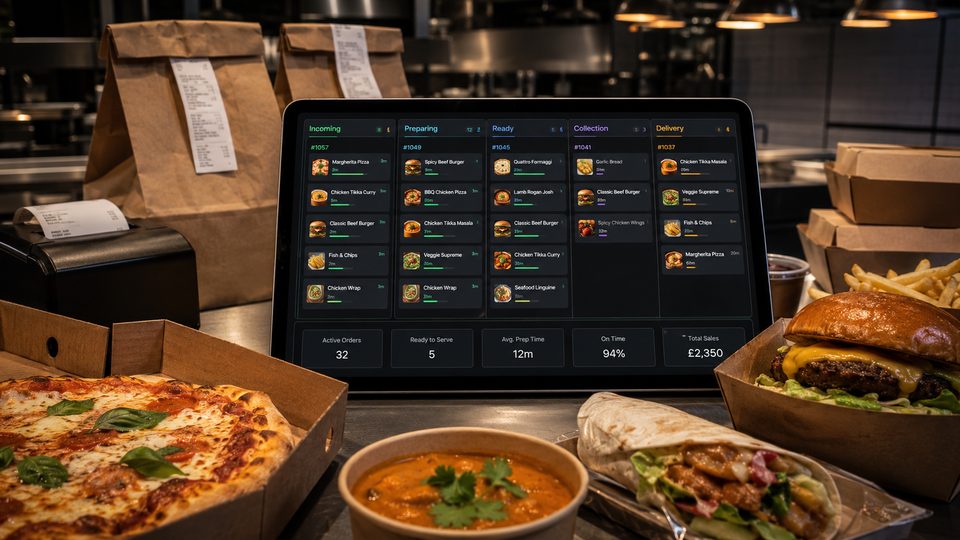
| Status | Typical operational position | Possible response |
|---|---|---|
| Received, not accepted | The business has not committed kitchen capacity | Change or cancellation may be straightforward, subject to payment status |
| Accepted, not started | Capacity and stock may already be reserved | Change may be possible after a quick kitchen check |
| In preparation | Ingredients and labour have been committed | Some additions may be possible; removal or cancellation may not be |
| Packed or ready | The order is complete and quality time is running | Limited operational changes; resolution may need a separate remake or refund decision |
| With driver or collected | Handover has taken place | Treat as a delivery, quality or order-accuracy issue rather than an ordinary amendment |
Set customer expectations before payment
The ordering journey should explain:
- how to request a change or cancellation;
- which contact method is monitored during service;
- that the outcome depends on order status and channel rules;
- how additional charges or refunds are confirmed;
- what happens if the business cannot fulfil an accepted order;
- where marketplace customers must manage the request through the platform.
Avoid a vague statement such as “no refunds”. A blanket phrase may be misleading and does not help staff deal consistently with business-caused errors, failed fulfilment or applicable consumer rights.
Use practical cut-off rules
A cut-off can help staff, but it should reflect the operation. Suitable rules may refer to:
- whether preparation has started;
- whether an item is already cooked or assembled;
- whether a driver has been assigned or dispatched;
- whether ingredients were specially purchased or prepared;
- whether a large advance order has passed its agreed amendment deadline.
Do not promise that any change is guaranteed within a fixed number of minutes if the kitchen may start immediately.
Handle changes through one controlled route
- Locate the correct order and confirm the customer identity or order reference.
- Check the live status with the kitchen or fulfilment system.
- Confirm whether the requested change is operationally possible.
- Calculate any price difference and obtain agreement.
- Update the original order record rather than relying on a separate verbal note.
- Make the change visible to every affected station and the driver where relevant.
- Send a revised confirmation.
Never place allergen-related changes in a general free-text note without confirming that the kitchen can see and act on them. Where the request cannot be handled safely, staff should explain the limitation rather than improvise.
Direct website and app orders
The business needs its own process for:
- payment adjustments;
- partial and full refunds;
- failed refund attempts;
- cancelled orders still appearing in the kitchen;
- customer confirmation;
- daily reconciliation.
Check how the ordering supplier and payment provider represent each status. “Cancelled” in the ordering system does not always mean the payment has been refunded.
Marketplace orders
Use the current partner process for the relevant platform. The marketplace may control customer communication, refunds or delivery cancellation. Staff should not promise an outcome that only the platform can authorise.
Record the platform case or reference, the reason, the operational outcome and any financial adjustment expected. Reconcile the eventual payout rather than assuming the issue is complete when the customer conversation ends.
When the business cannot fulfil
If an accepted item becomes unavailable or the order cannot be completed:
- contact the customer promptly through the appropriate channel;
- offer only substitutions the customer can actively accept;
- state any price difference clearly;
- do not substitute an item where allergen or dietary suitability is uncertain;
- cancel or refund the affected part where no acceptable solution exists;
- correct the menu or availability source to prevent repeat orders.
Refund timing and communication
Tell the customer:
- what amount has been authorised for refund;
- whether it is full or partial;
- which payment route will be used;
- that bank or provider processing times may affect when it appears;
- who to contact if it does not arrive after the stated provider window.
Do not state a universal bank-processing time unless it has been checked against the actual payment provider. Separate the date the business initiated the refund from the date the customer's bank displays it.
Keep an audit trail
Record:
- original basket and status;
- requested change or cancellation;
- time and contact channel;
- staff member handling it;
- kitchen and delivery action;
- refund or additional payment reference;
- customer confirmation;
- root cause where the business created the problem.
The record protects the customer and the business and makes recurring menu, system or training failures visible.
Policy checklist
- Is the contact route visible before payment?
- Do staff understand each order status?
- Can the kitchen see an approved change immediately?
- Can direct and marketplace refunds be tracked separately?
- Does the policy avoid misleading blanket exclusions?
- Are large advance orders covered by separate agreed terms?
- Are allergen-related amendments handled through a safe escalation route?
- Are cancelled orders included in daily reconciliation?
Related guides
- Online Ordering — the main guide for the wider topic.
- Order Handling and Operations — the broader guide that frames this implementation.
- Order Accuracy and Quality Control — a closely related operational control to review alongside this page.
- Pre-Ordering and Advance Orders — a closely related operational control to review alongside this page.
Official guidance checked
- GOV.UK and CMA: selling products and services in line with consumer protection law
- Competition and Markets Authority: clear and accurate pricing
- Food Standards Agency: allergen guidance for food businesses
Guidance checked: 24 July 2026. The business should verify its policy against current consumer law, provider contracts and the circumstances of the individual order.
Operational, legal and platform requirements can change. Recheck official guidance and supplier documentation before altering a live service.
Related practical guides
 Online OrderingOrder Accuracy and Quality ControlOrder accuracy is not one kitchen check at the end of preparation. It is the result of several connected controls: the menu presents valid choice…Read guide →
 Online OrderingOnline Ordering for New Takeaway BusinessesA new takeaway does not need a marketplace listing, ordering website, branded app and loyalty programme on its first day. It needs one dependable…Read guide →Online OrderingMulti-Location Restaurant Ordering Systems: What ChangesMoving from one takeaway location to several changes more than the number of kitchens. Identity, menu governance, pricing, capacity, support, pay…Read guide →Online OrderingMarketplace Visibility and RankingMarketplace visibility can affect order volume, but restaurants rarely know the full logic behind search, recommendation and sponsored placement.…Read guide →
 Online OrderingMarketplace Menu ManagementA marketplace menu is a live operating document. It controls what customers can buy, what the kitchen receives and what the business may later ne…Read guide →Online OrderingMarketplace Commission StructuresMarketplace cost is rarely one simple percentage. The total depends on the provider, contract, delivery model, promotions, payment treatment, ref…Read guide →
Connect customer ordering with operations and profit
Use the wider guide library to check the menu, kitchen, fulfilment, payment and financial implications of each decision.
Browse all practical guides