Multi-Location Restaurant Ordering Systems: What Changes
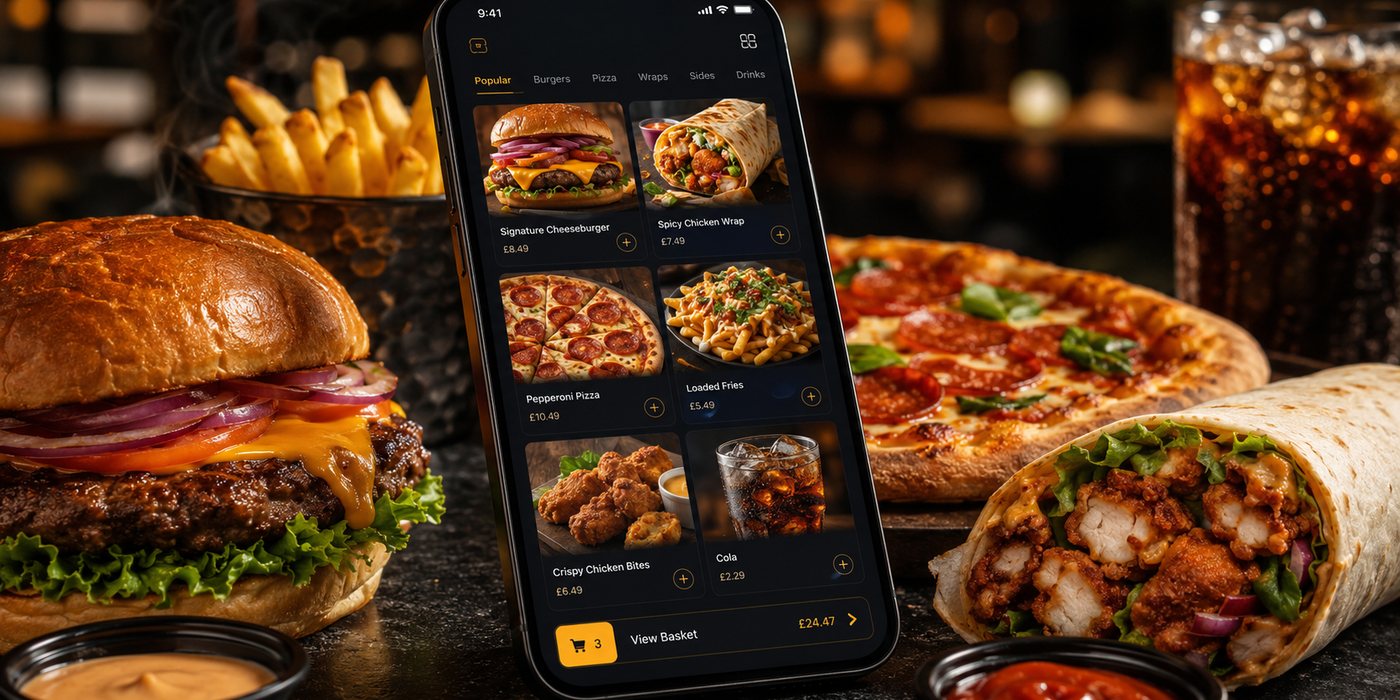
Moving from one takeaway location to several changes more than the number of kitchens. Identity, menu governance, pricing, capacity, support, payments and reporting all need an explicit location dimension. This guide…
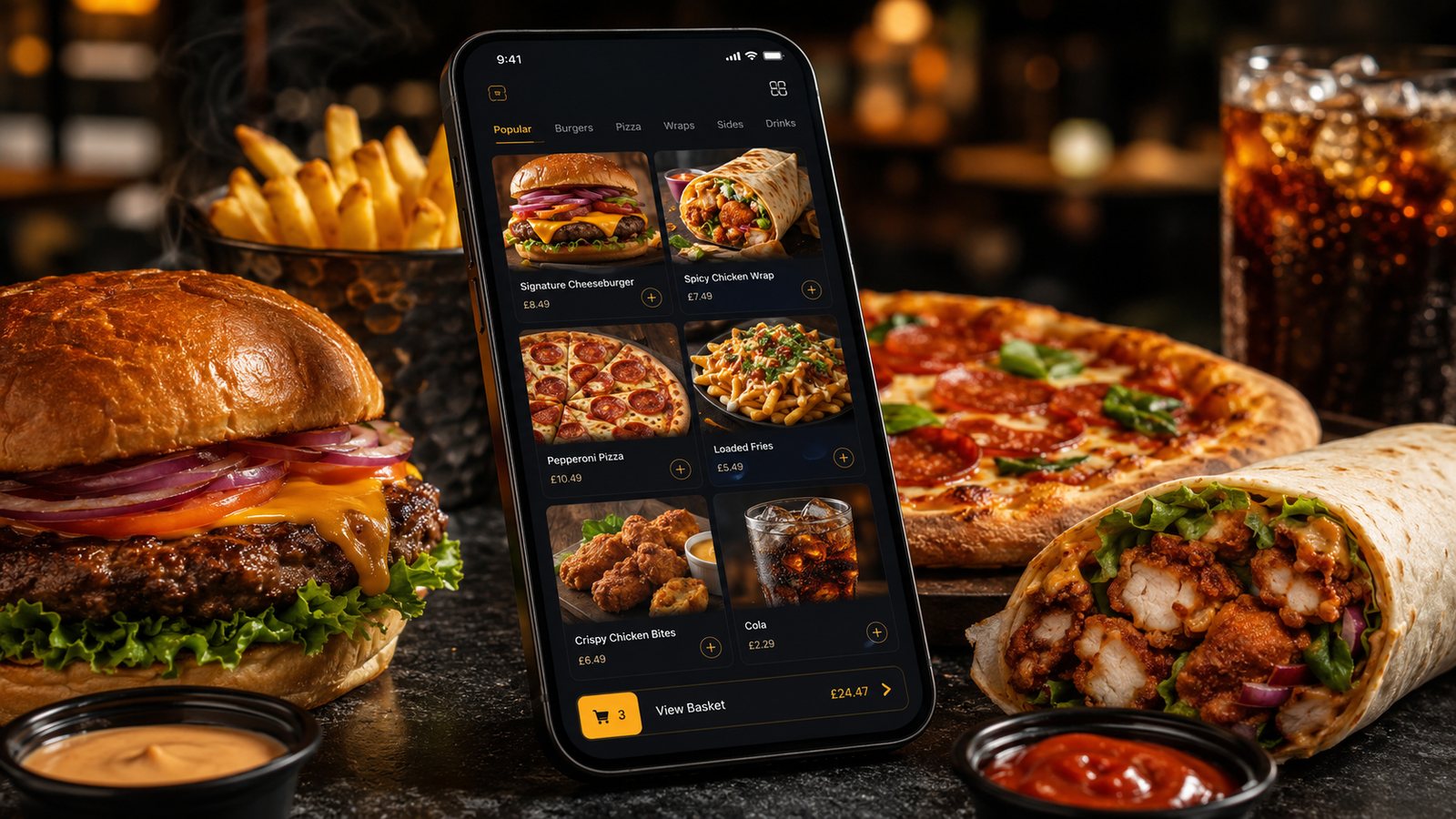
Moving from one takeaway location to several changes more than the number of kitchens. Identity, menu governance, pricing, capacity, support, payments and reporting all need an explicit location dimension. This guide highlights the controls that must change before expansion.
Customer journey changes
- The customer must understand which branch will fulfil the order.
- Address and collection selection must happen early enough to show the correct menu, price and promise.
- Saved addresses must be revalidated when zones change.
- Location closure or overload needs an honest alternative.
- Customer support must know which branch owns the case.
Menu and availability changes
A single menu may become a master catalogue with location-specific activation, price and stock. Define whether a modifier, image, recipe or allergen statement is global or local. Prevent a local manager from unintentionally changing every branch.
Operational architecture changes
| Single location | Multi-location requirement |
|---|---|
| One kitchen destination | Location-aware routing with duplicate and wrong-branch protection |
| One delivery zone | Overlaps, exclusions, handover and local capacity |
| One payment statement | Location, legal entity and settlement mapping |
| One support team | Central triage with local evidence and authority |
| One configuration | Global template plus controlled local exceptions |
Payments and reporting changes
Record the selling entity, location, channel, payment provider, fees, refund and bank settlement. If branches use different merchant accounts or franchises, confirm how receipts, VAT records and customer terms identify the correct business.
Access and governance changes
Role-based access becomes essential. A branch manager may update local availability but not payment credentials, global promotions or another location's customer records. Test offboarding and emergency access.
Rollout changes
Do not launch every site at once. Pilot one representative location, then a location with different menu or delivery complexity. Use the same acceptance suite and log local exceptions rather than creating undocumented workarounds.
Supplier questions
- How are global and local fields distinguished?
- Can zones overlap, and how is the winning location selected?
- Can reports reconcile to separate merchant accounts?
- How are location closures and pre-orders handled?
- Can each branch export its data while head office sees the network?
- What happens to app, website and marketplace routing during outage?
Practical next step: create a location responsibility matrix for menu, price, availability, delivery, refunds, support and reporting. Resolve any field with two owners before adding the next branch.
Customer accounts and loyalty change too
Decide whether accounts, points, vouchers and order history work across every location. If only some branches participate, the app and checkout must explain this before redemption. Test refunds and balance corrections across different merchant accounts.
Contract and supplier responsibilities
Confirm whether the supplier charges per location, per device, per integration or per order. Ask who configures new branches, who owns store listings and how long rollout support lasts. Include removal of a closed location and export of its records in the acceptance criteria.
Document which settings are inherited and which are copied once. A copied setting can drift silently while an inherited setting can create a network-wide incident.
Run a complete branch-removal test as well as an addition test. Expansion tools often handle creation better than closure, leaving stale menus, customer links or reporting records active after a site has stopped trading.
Related guides
- Online Ordering — the main guide for the wider topic.
- Multi-Location Ordering — the broader guide that frames this implementation.
- How to Migrate Ordering Platforms — a closely related operational control to review alongside this page.
Operational, legal and platform requirements can change. Recheck official guidance and supplier documentation before altering a live service.
Related practical guides
 Online OrderingOrder Accuracy and Quality ControlOrder accuracy is not one kitchen check at the end of preparation. It is the result of several connected controls: the menu presents valid choice…Read guide →
 Online OrderingOnline Ordering for New Takeaway BusinessesA new takeaway does not need a marketplace listing, ordering website, branded app and loyalty programme on its first day. It needs one dependable…Read guide →Online OrderingMarketplace Visibility and RankingMarketplace visibility can affect order volume, but restaurants rarely know the full logic behind search, recommendation and sponsored placement.…Read guide →
 Online OrderingMarketplace Menu ManagementA marketplace menu is a live operating document. It controls what customers can buy, what the kitchen receives and what the business may later ne…Read guide →Online OrderingMarketplace Commission StructuresMarketplace cost is rarely one simple percentage. The total depends on the provider, contract, delivery model, promotions, payment treatment, ref…Read guide →
 Online OrderingHow to Handle Allergens OnlineA safe online allergen process connects approved recipes, supplier specifications, menu data, trained staff, kitchen controls and delivery-stage …Read guide →
Connect customer ordering with operations and profit
Use the wider guide library to check the menu, kitchen, fulfilment, payment and financial implications of each decision.
Browse all practical guides