Dietary Requirements on Digital Menus
Vegan, vegetarian, halal, gluten-free and other dietary descriptions can help customers choose, but they are claims that need defined standards and evidence. They do not replace mandatory allergen information or a con…
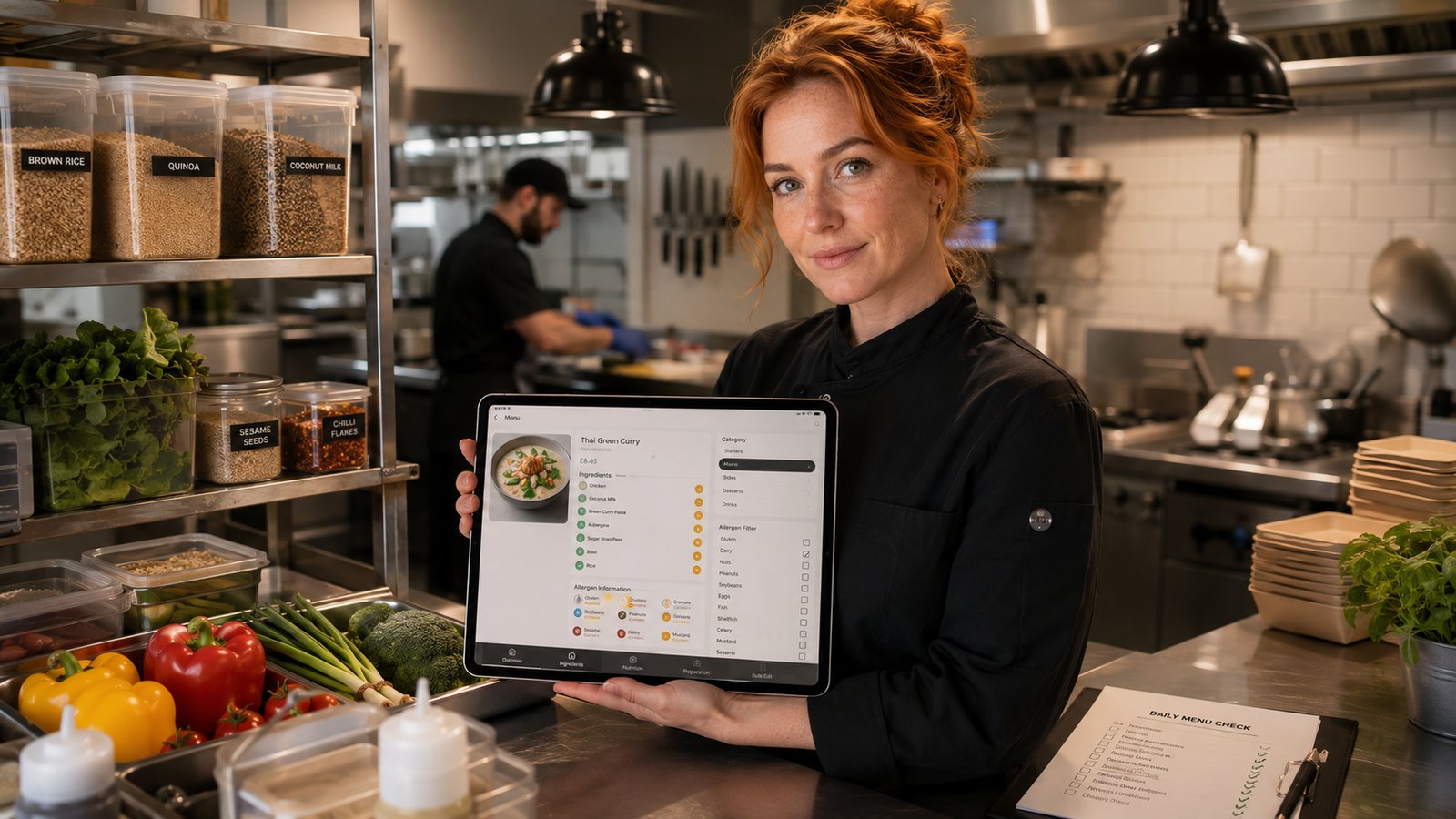
Vegan, vegetarian, halal, gluten-free and other dietary descriptions can help customers choose, but they are claims that need defined standards and evidence. They do not replace mandatory allergen information or a conversation about serious food allergy.
Separate preference, belief and medical risk
| Label | What the business must define | Main risk |
|---|---|---|
| Vegetarian or vegan | Ingredients, processing aids, garnishes and preparation standard | Hidden animal-derived ingredients or uncontrolled substitutions |
| Halal | Supplier certification, ingredients, preparation and storage standard | Using a broad badge without evidence for the whole item |
| Gluten-free | Recipe, ingredients and cross-contact controls that support the claim | Treating “no gluten ingredient” as equivalent to a controlled gluten-free claim |
| Allergen request | Regulated allergen information and safe operational process | Turning a filter or free-text note into an unsupported safety guarantee |
Create a written claim standard
For every dietary badge, record the definition, evidence required, permitted wording, approver and review trigger. A supplier description is not enough if the restaurant adds sauces, cooks in shared oil or uses common utensils. Claims should be item-specific and removed immediately when evidence becomes uncertain.
Design filters conservatively
A dietary filter should return only items that meet the approved rule, including default modifiers. It must not hide important allergen information. Test whether optional sauces, toppings and substitutions change the result. Provide a clear “information last reviewed” process internally, but do not rely on a date stamp to excuse stale data.
Explain cross-contact honestly
Generic disclaimers do not correct inaccurate claims. Describe shared equipment or preparation only where relevant and avoid wording that places the entire burden on the customer. If the operation cannot substantiate a strong claim, use more precise language and invite the customer to contact trained staff before ordering.
Control changes across channels
- Link every badge to the approved recipe and supplier specification.
- Review claims after ingredient, oil, sauce, garnish or equipment changes.
- Synchronise website, app, marketplace, printed menu and staff reference.
- Prevent unapproved local edits by branches or agencies.
- Record emergency substitutions and remove affected filters before sale.
- Test delivery-stage information for orders involving regulated allergens.
Support customers without collecting unnecessary sensitive data
Do not build customer profiles that infer religion or health conditions merely from menu choices. A one-off dietary selection may be used to fulfil the order, but long-term profiling or marketing requires a separate purpose and privacy assessment. Keep free-text notes factual and limit access.
Practical next step
Audit one dietary filter from customer screen to kitchen ticket. Select five items, test every default and optional modifier, verify supplier evidence and record whether the claim remains true after preparation. Remove the badge until the evidence is complete.
Test the complete customer journey
Check search results, category pages, item pages, modifiers, basket, checkout and order confirmation. A badge that is correct on the menu may become misleading if the basket silently adds a default sauce or if a bundle includes an incompatible side. Test keyboard use, screen-reader labels and mobile zoom so the information is not technically present but practically inaccessible.
Govern external certifications and supplier claims
Where a claim depends on certification or a supplier statement, keep the current document, scope and expiry date. Confirm whether it applies to the ingredient, the finished item or the whole preparation process. Remove the claim if the source changes or if the kitchen process no longer matches the approved standard.
Customer-support scripts should distinguish a dietary preference from a medically serious allergy. Staff must not infer that a customer is safe because an item appears in a vegan, halal or gluten-free category.
Related guides
- Online Ordering — the main guide for the wider topic.
- Online Compliance and Food Safety — the broader guide that frames this implementation.
- How to Handle Allergens Online — a closely related operational control to review alongside this page.
- Food Hygiene Ratings and Online Ordering — a closely related operational control to review alongside this page.
Sources and date checked
Guidance checked: 24 July 2026. Recheck official guidance, local requirements and supplier documentation before changing a live operation.
Operational, legal and platform requirements can change. Recheck official guidance and supplier documentation before altering a live service.
Related practical guides
 Online OrderingHow to Handle Allergens OnlineA safe online allergen process connects approved recipes, supplier specifications, menu data, trained staff, kitchen controls and delivery-stage …Read guide →
 Online OrderingHow to Design Checkout for TakeawayA takeaway checkout should confirm a clear order, a realistic fulfilment promise and a transparent total price with as little unnecessary effort …Read guide →Online OrderingFood Hygiene Ratings and Online OrderingA hygiene rating is an official snapshot of standards found at an inspection. Displaying it accurately can build trust, but the rating should not…Read guide →
 Online OrderingConversion Rate Optimisation for OrderingConversion-rate optimisation for takeaway ordering should remove avoidable confusion and failure, not pressure customers into unsuitable orders. …Read guide →
 Online OrderingCollection and Click-and-Collect SetupClick-and-collect removes driver and delivery-zone complexity, but it does not remove the need for capacity control. A poor setup moves the queue…Read guide →
 Online OrderingHow to Reduce Dependence on Delivery MarketplacesReducing marketplace dependence should not mean switching off a channel that still brings useful demand. The safer objective is to build a direct…Read guide →
Connect customer ordering with operations and profit
Use the wider guide library to check the menu, kitchen, fulfilment, payment and financial implications of each decision.
Browse all practical guides