Telephone Orders Alongside Digital
Telephone orders can remain valuable for accessibility, complex enquiries and customers who prefer human help. The operational requirement is to bring them into the same menu, capacity, kitchen and financial controls…
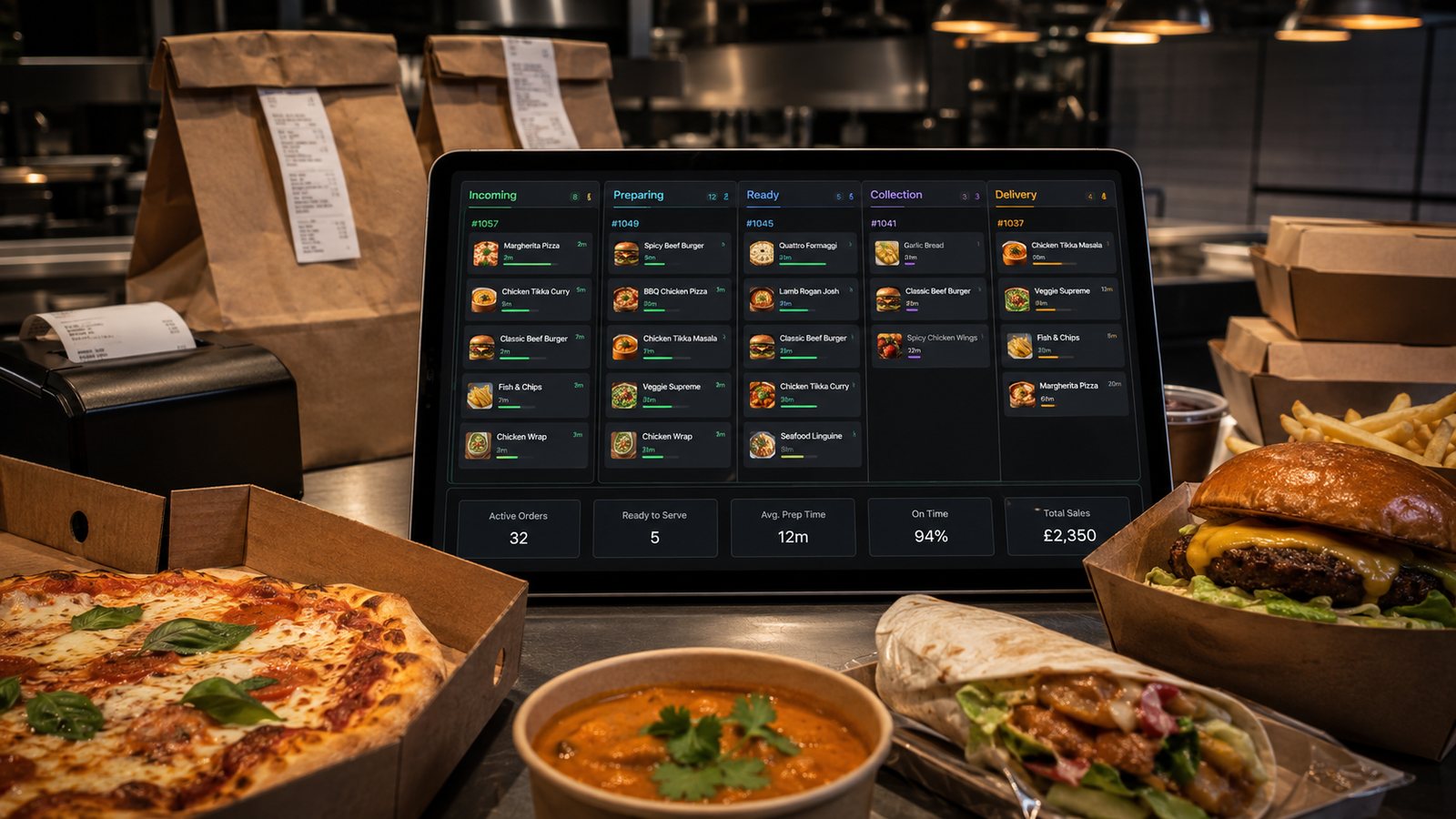
Telephone orders can remain valuable for accessibility, complex enquiries and customers who prefer human help. The operational requirement is to bring them into the same menu, capacity, kitchen and financial controls as digital orders.
Enter the order into the shared system
Use the POS or controlled order record while speaking to the customer. A handwritten note outside the system creates invisible workload, weak audit evidence and duplicate entry. If the normal system is unavailable, use a numbered fallback form and reconcile it after recovery.
Use a structured call sequence
- Confirm delivery or collection.
- Check address or collection location and available time.
- Select items and valid modifiers from the approved menu.
- Escalate allergen or unsupported dietary questions.
- State the complete price and payment method.
- Read back the full order, contact detail and promise.
- Confirm the internal order number and support route.
Protect menu and pricing consistency
Telephone staff should use the current controlled menu rather than memory or an old paper copy. Define what happens when a caller asks for an unlisted combination. Do not create unpriced free-text products that the kitchen cannot route or report. Significant price and fee information should be explained before the order is accepted.
Handle allergen enquiries safely
Provide required information from the approved source and follow the business escalation procedure. Do not rely on memory, say that a product is “safe” without the authorised basis, or use a disclaimer as a substitute for accurate information. Record the enquiry and ensure the kitchen receives the required operational flag without exposing unnecessary personal details.
Choose an approved payment route
Cash, approved payment link, card-present collection or an authorised telephone-payment process each create different controls. Never write down full card details or ask customers to send them in a message. If payment outcome is uncertain, check the provider record before taking payment again.
Manage calls during peaks
| Service state | Telephone control |
|---|---|
| Green | Normal staffed line and published promise. |
| Amber | Extend promise, reduce complex exceptions and use a clear callback rule. |
| Red | Pause new telephone orders or limit the line to support and existing-order enquiries. |
Do not allow the telephone to bypass a digital capacity pause. If the kitchen cannot accept another website order, it usually cannot accept unlimited calls either.
Train for accuracy and respectful service
Use representative calls, accents, background noise, large orders and correction scenarios. Teach staff to read back without rushing and to explain when the controlled ordering system is temporarily unavailable. Keep telephone ordering available where it supports accessibility or essential customer needs; phase it down only from evidence, not fashion.
Measure the channel
- Call answer and abandonment rate.
- Order-entry and correction time.
- Wrong item, modifier, address and price errors.
- Contribution and fulfilment mix.
- Allergen enquiries and escalations.
- Orders entered outside the shared system.
Practical next step
Listen to or observe a representative sample of calls lawfully and transparently. Map every piece of information into the order record. Remove repeated questions and introduce a read-back checklist before changing the channel.
Related guides
- Cross-Channel Operations — the main guide for the wider topic.
- Channel-Specific Operations — the broader guide that frames this implementation.
- Social Media Ordering — a closely related operational control to review alongside this page.
- Walk-In Orders with Digital Systems — a closely related operational control to review alongside this page.
Operational, legal and platform requirements can change. Recheck official guidance and supplier documentation before altering a live service.
Related practical guides
 Cross-Channel OperationsWalk-In Orders with Digital SystemsWalk-in customers make the queue visible, but they still share the same kitchen, stock and capacity as remote orders. Counter service should be f…Read guide →Cross-Channel OperationsStaffing for Digital OrdersDigital demand creates an invisible queue and new control work. Staff the workload at intake, kitchen, packing, handover, support and reconciliat…Read guide →Cross-Channel OperationsReducing Kitchen Load from Online OrdersReduce digital workload by controlling product complexity, preparation, batching, capacity and information quality. Do not solve an overloaded ki…Read guide →Cross-Channel OperationsOrder Timing and Prep ManagementA preparation promise should be generated from real workload and fulfilment conditions, then updated when those conditions change. One fixed time…Read guide →
 Restaurant AppsWhite-Label Restaurant Apps: Pros and ConsA white-label app can shorten delivery time, but the important trade-off is not branding versus code. It is the supplier operating model, ownersh…Read guide →
 Online OrderingMarketplace Commission StructuresMarketplace cost is rarely one simple percentage. The total depends on the provider, contract, delivery model, promotions, payment treatment, ref…Read guide →
Connect customer ordering with operations and profit
Use the wider guide library to check the menu, kitchen, fulfilment, payment and financial implications of each decision.
Browse all practical guides