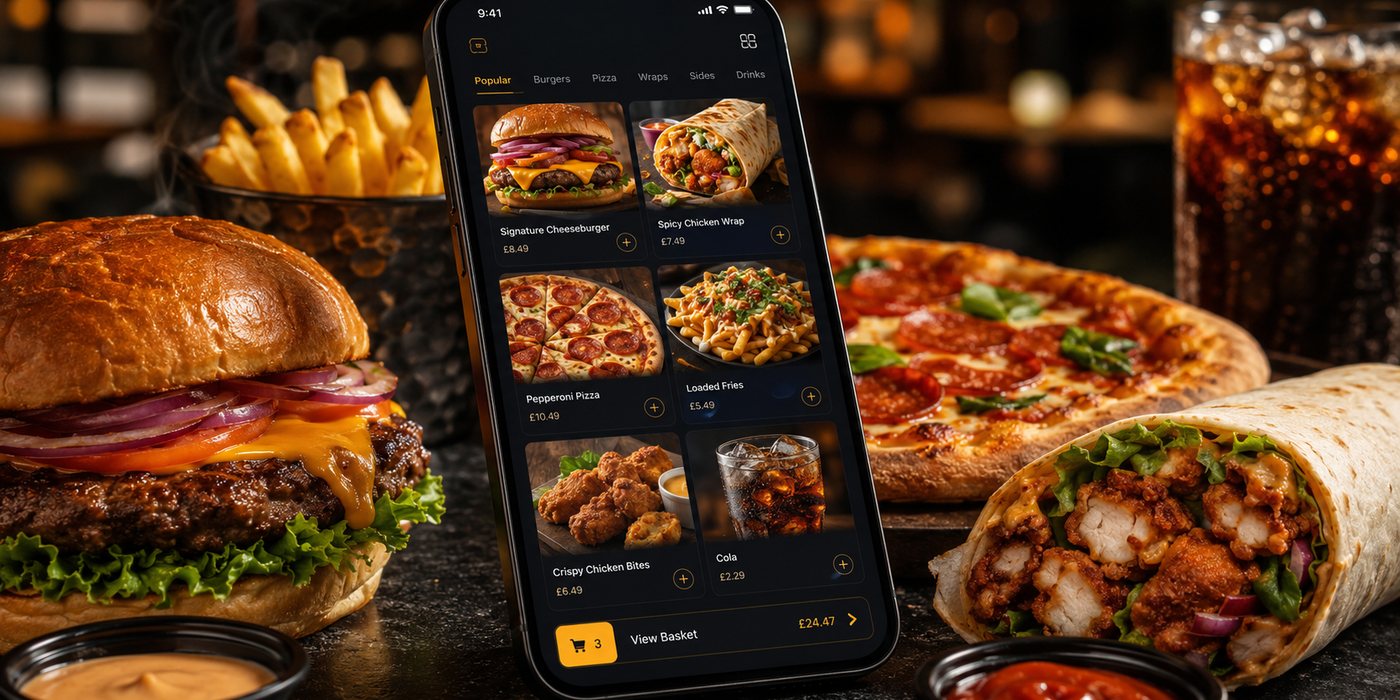
How Much Does a Takeaway App Cost?
The price depends less on the number of screens than on the ordering system, integrations, ownership, support and change burden behind them.
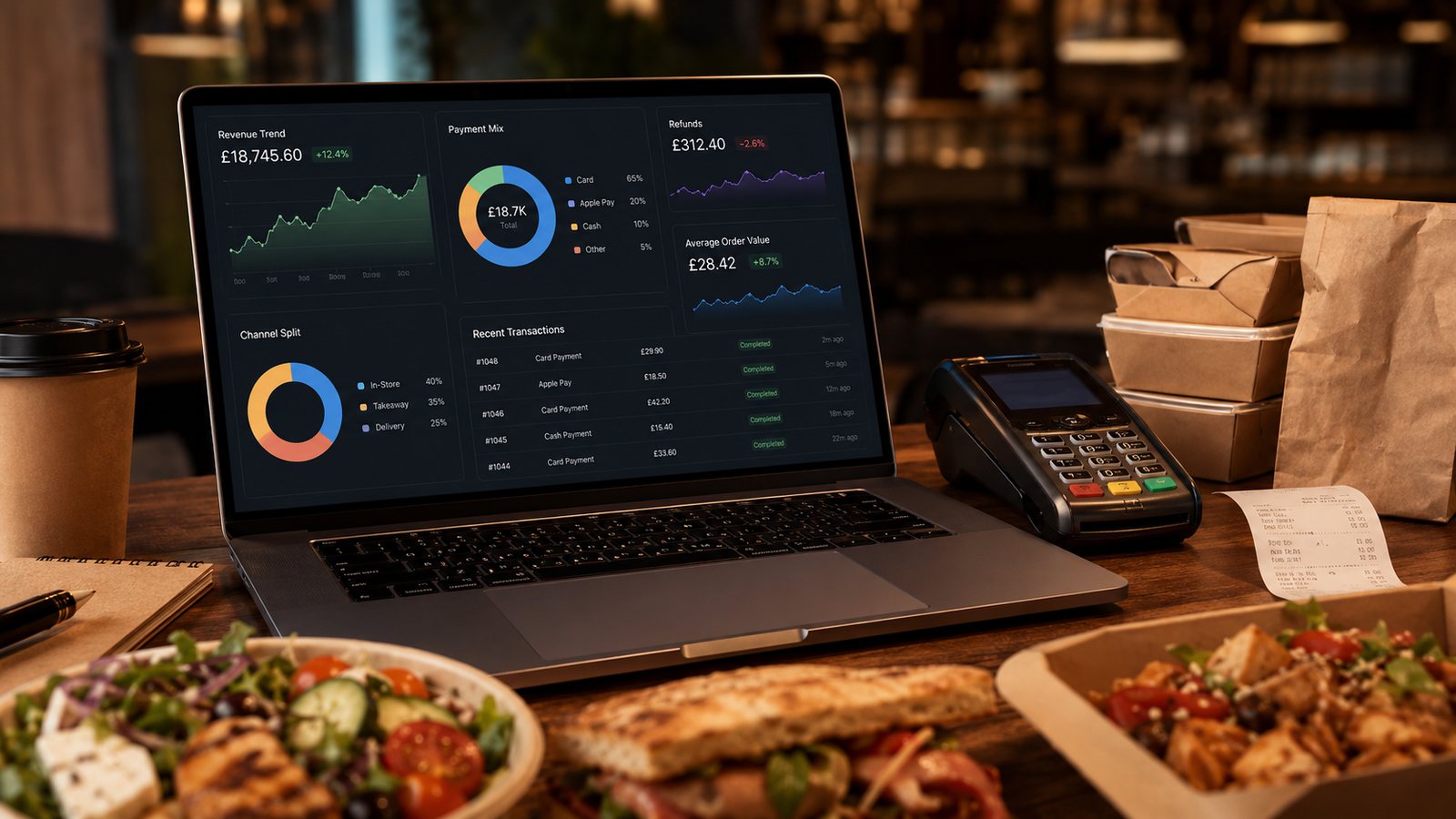
The price depends less on the number of screens than on the ordering system, integrations, ownership, support and change burden behind them.
Why a headline price is misleading
Two apps can look similar while carrying very different responsibilities. One may be a branded front end to a supplier platform; another may include a custom backend, POS integration, loyalty ledger, delivery logic and independent release process. Treat any price without a written scope as an incomplete starting point.
Cost drivers by capability
| Capability | What creates cost | Evidence to request |
|---|---|---|
| Menu and ordering | Complex modifiers, availability, locations and capacity rules | Representative menu imported and tested |
| Payments | Hosted or embedded checkout, refunds, unknown outcomes and reconciliation | End-to-end payment and refund demonstration |
| POS/KDS integration | Field mapping, routing, monitoring and version changes | Supported integration specification and failure process |
| Accounts and loyalty | Identity, balances, fraud controls, deletion and migration | Data model, export and account-recovery test |
| Notifications and marketing | Permission handling, segmentation, suppression and reporting | Consent records and campaign controls |
| Multi-location operation | Location selection, shared customers, local menus and reporting | Live multi-location reference workflow |
Typical commercial models
Suppliers may charge setup plus subscription, per-location fees, per-order fees, integration fees or a combination. Custom teams may charge for discovery, build and ongoing support. Neither model is automatically cheaper. Normalise every proposal into the same categories and time period.
- One-off discovery, configuration, design and migration.
- Recurring platform, hosting, support and monitoring.
- Usage charges for orders, messages, maps or third-party services.
- Change requests and operating-system updates.
- Store accounts, testing devices and compliance work.
- Marketing, incentives and customer support.
- Exit, export, retirement and dual running.
Use illustrative scenarios, not invented market averages
Model the business you actually have. For example, a cautious scenario may assume only a small share of existing direct customers adopt the app. An expected scenario may include a tested launch offer. A high scenario should still respect kitchen and delivery capacity. Label all figures as illustrative and change the assumptions before using the model.
Check app-store and account costs separately
Developer-account fees are only a small part of the total, but account ownership matters. Apple currently states an annual programme membership fee and Google Play states a one-time registration fee; both should be rechecked in the official documentation at the point of budgeting. The takeaway should understand whose organisation appears as the publisher and who controls account recovery.
When the cheapest answer is not an app
If the mobile website is slow, menu data is unreliable or repeat direct demand is weak, fixing the owned web journey may produce more value than commissioning an app. The correct cost comparison includes the option of not building yet.
Decision checklist
- Define the app’s job and measurable success signal.
- Request line-by-line proposals with assumptions and exclusions.
- Build a three-year total-cost model.
- Test integration and failure scenarios.
- Confirm ownership, export and exit.
- Approve a controlled pilot rather than an irreversible full launch.
Test quotation sensitivity
Change the assumptions that suppliers commonly leave implicit: order volume, locations, messages, support incidents, integration changes and promotional usage. A proposal that is attractive only under one optimistic volume should not be presented as a dependable budget.
Include internal workload
Assign a realistic cost to menu preparation, testing, campaign approval, customer support, finance reconciliation and supplier management. These tasks continue after launch. If nobody has capacity to own them, the app is underfunded even when every external invoice is included.
Related guides
- Restaurant Apps — the main guide for the wider topic.
- Takeaway App Cost and Budgeting — the broader guide that frames this implementation.
- App Budget for Different Business Sizes — a closely related operational control to review alongside this page.
- Takeaway App Cost Guide — a closely related operational control to review alongside this page.
Sources and date checked
Guidance checked: 24 July 2026. Recheck supplier pricing, platform terms and regulatory guidance before acting.
Operational, legal and platform requirements can change. Recheck official guidance and supplier documentation before altering a live service.
Related practical guides
 Restaurant AppsWhite-Label Restaurant Apps: Pros and ConsA white-label app can shorten delivery time, but the important trade-off is not branding versus code. It is the supplier operating model, ownersh…Read guide →
 Restaurant AppsTakeaway App Cost GuideA takeaway app has no single meaningful price. The useful question is what the business must pay to launch, operate, support, market and eventual…Read guide →
 Restaurant AppsProgressive Web Apps for TakeawaysA progressive web app can provide an install-like web ordering experience while retaining a web distribution model. It should be chosen for the r…Read guide →Restaurant AppsHow to Plan a Restaurant App LaunchPlan an app launch through operational readiness, store submission, controlled customer testing and measurable adoption. Do not let a marketing d…Read guide →Restaurant AppsGetting Customers to Download and Use the AppPromote an app to customers for whom it solves a real repeat-order problem, then measure successful use rather than raw downloads.Read guide →Restaurant AppsEssential Features of a Restaurant Ordering AppAn essential app feature is one without which a customer cannot place a clear, payable and operationally achievable order—or the business cannot …Read guide →
Connect customer ordering with operations and profit
Use the wider guide library to check the menu, kitchen, fulfilment, payment and financial implications of each decision.
Browse all practical guides